


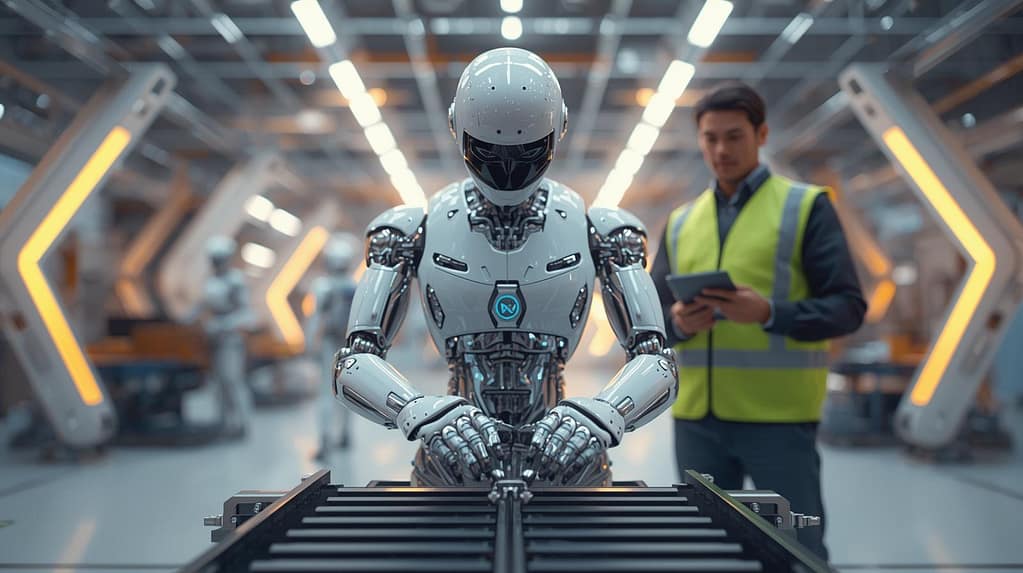
Back in March 2026, Bank of America issued a research note featuring a figure so massive that readers paused mid-sentence. Their team believes the planet could host around 3 billion humanoid robots by 2060 – more than double today’s total car count when adjusted per person. At that pace, nearly two out of every three human-shaped machines, roughly 2 billion, would reside where people live. These bots wouldn’t fill industrial halls or storage centers. They’d settle into living rooms, hallways, and bedrooms. Houses.
Thirty-four years remain until that forecast comes due. Right now, though – this moment in 2026 – matters far more directly for people on the job, companies operating, and sectors adapting as conditions shift. Shipments of humanoid robots are expected to hit 90,000 per year by 2026, based on BofA research, a figure nearly nonexistent in commercial terms only three years back. By 2030, those numbers could climb to 1.2 million each year, advancing at an 86% average yearly increase. Analysts point out: such speed exceeds what was seen during the initial phase of electric car adoption. With estimates pointing to expansion from $2.92 billion in 2025 to $15.26 billion by 2030, the worldwide humanoid robot sector appears set for rapid change – its pace reflected in a 39.2% yearly rise. Shaped largely through use in factories, supply chains, medical settings, and home support roles, progress unfolds alongside rising corporate interest. Over fifty firms currently pursue development, while documented releases of commercial models have reached 150 since early 2026.
Right now, this isn’t about guesses or far-off ideas. What we’re seeing comes from actual projects – already financed, under construction, rolling out. Labs no longer hold back the technology; it’s moving into real spaces. People at every level, from those operating machinery to top decision makers, are wondering: how does this shift affect the individuals whose tasks match what these systems now perform?
Why 2026 Is the Year That Changes Everything About This Conversation
A robot named Atlas once jumped hurdles, captured on video by Boston Dynamics. Bowing gently, ASIMO moved audiences during a presentation led by Honda engineers. Across exhibition halls, early models rolled smoothly across level ground under bright lights. Yet none became common outside controlled environments due to steep costs when moving beyond staged routines. Real tasks proved too unpredictable compared to choreographed displays.
By 2026, the divide narrows – driven by clear, quantifiable shifts confirmed through real-world performance, not promotional claims. Late 2025 into early 2026 saw three key advances cross a threshold recognized by roboticists as a tipping point, shifting progress from showcase models to active field use, something long forecast yet rarely achieved. While expectations had built steadily, it took tangible results during this window to finally bridge theory and operation.
One key development involves End-to-End Neural Networks enabling humanoid robots to master complicated jobs after watching a person work for just a few hours – no longer demanding months of tailored coding by expert programmers. Although traditional methods required extensive hand-coded logic, systems like Figure AI’s Helix AI instead learn directly from visual examples. Because it drives the Figure 02 robot, this method supports advanced assembly operations via observational learning and pattern adaptation. While earlier approaches needed half a year of engineering effort back in 2022, similar capabilities today emerge during one afternoon of guided demonstration. Far beyond slight upgrades, such progress reshapes how cost-effective robotic integration can be.
Another shift comes from new actuators packed with strong yet responsive power, similar in feel to living muscle. Earlier models tended to be one or the other – strong but stiff, such as the hydraulics driving early Boston Dynamics Atlas robots, or fine-tuned though too feeble. By 2026, electric versions adjust output smoothly, gentle enough for lifting fragile glassware, yet tough when pushing large loads. Because they sense resistance, these machines adapt on contact. Such responsiveness allows them to share workspace with people and manage everyday items without error.
A shift now underway involves solid-state batteries, delivering twice the energy capacity for humanoid machines over older lithium-ion setups. By 2026, many of these robots manage a complete eight-hour working day without needing power again. This level of endurance was out of reach earlier, back when hourly recharges limited real-world use. Previously, an eight-hour span seemed distant given how often units required charging. Machines demanding constant plug-ins create operational headaches rather than helping workflows.
The Real Deployment Landscape: What Is Actually Happening on Factory Floors and in Warehouses
Right now, in 2026, how humanoid robots are actually used isn’t quite as dramatic as some headlines claim – yet it’s also not as limited as critics insist. According to Bain’s analysis of tech trends, the truth sits in the middle: nearly every application still operates as a test project, needing constant oversight by people, often confined to controlled spaces or predictable routines. While demos may show impressive results under perfect conditions, performance drops when faced with true uncertainty – and that difference has been clearly recorded.
Despite skepticism elsewhere, evidence shows commercial adoption advancing across particular sectors. Notably, Agility Robotics’ machine called Digit marks a milestone – researchers acknowledge it as the first humanoid generating income through real-world work inside warehouses. Standing five feet nine inches tall, this model moves effectively in confined areas thanks to knees that bend rearward. Its two arms stretch from ground level up to six feet high, allowing broad interaction with objects. Navigation relies on full-surround imaging combined with laser-based sensing tech. Trials now underway involve Amazon alongside large-scale distribution networks, focusing only on duties today’s automation performs dependably – transporting containers, trays, and cartons along fixed paths connecting selection zones and belt-driven transport units.
Despite its recent emergence, Figure AI’s collaboration with BMW and key logistics providers has led to real-world use of Figure 02 robots across auto production lines. These units perform visual inspections, identify surface-level flaws, while transporting heavy components from one station to another. Because they feature highly agile hands, the machines manipulate conventional tools alongside irregularly shaped items – ideal for today’s diverse vehicle builds. Over at Mercedes, operations in Germany and Hungary now employ Apptronik’s Apollo system mainly for grueling, monotonous jobs where hiring remains difficult. Their approach? Treating robotic integration more like an experiment in automation limits than a full-scale human substitute.
A 40 percent drop in prices compared to last year shows up in Axis Intelligence’s review of deployments, where today’s models sell between about $5,900 and $150,000 based on performance level and how they are made. Priced at $13,500, the G1 unit from China’s Unitree is pushing firms in Europe and North America to rethink their timelines for cutting expenses. Meanwhile, 1X, a small company out of Norway, provides human-shaped robots suited for home tasks at a monthly fee of $499. As output grows and parts become cheaper – much like batteries and solar cells did – the path ahead suggests widespread market access could emerge within three years. Despite different starting points, most players now face pressure to adapt quickly.
The Three Companies Shaping the Market Today
One reason stands out: unlike smartphones, where two systems now control everything, human-shaped robots lack one clear frontrunner. Instead, several companies lead in separate directions, tackling rollout challenges differently. Each strategy shows how unsure experts remain about what actually lasts in this business.
Right now, Tesla’s Optimus project pulls in crowds – yet it also draws sharp doubt. While others hesitate, Tesla pushes ahead with plans to place thousands of these robots across its Gigafactories, handling jobs like organizing battery cells or checking product standards. Inside those walls, the company sees a live test zone: real production pressure shaping fast upgrades before any wider release. A date floats around late 2027 for outside availability, though Musk warns progress might feel painfully gradual. Still, voices like Bain question whether success behind closed doors truly prepares for messier realities elsewhere – when different companies try using them under unpredictable conditions.
A tighter path defines Figure AI – one rooted less in broad claims, more in real-world readiness. Instead of chasing many applications at once, the company focused on perfecting robots for factory environments first. Because of this focus, their collaboration with BMW led to Figure 02, now seen as a benchmark in continuous operation under actual conditions. Even during peak loads, it maintains performance without constant oversight. Talks are ongoing between UPS and Figure AI about bringing humanoid units into sorting hubs – spaces where timing and precision shape outcomes. Such integration could test scalability inside one of the densest operational webs on earth. What sets the machines apart isn’t just hardware; it is Helix AI, an approach letting them absorb tasks by watching workers. This reduces setup time sharply while cutting reliance on engineers. Deployment costs shift accordingly, making adoption easier even in tight-margin settings.
Late in 2024, Boston Dynamics unveiled an all-electric version of Atlas, swapping out the older hydraulic setup. Because joint rotation now reaches a full circle, motions once impossible for humans become reachable. Such flexibility allows navigation through tight areas – valuable when working inside cramped industrial sites. Though originally built for mobility tests, its role expanded into construction and power plant maintenance. Then came news at GTC 2026: collaboration with Google DeepMind on advanced artificial intelligence systems. This pairing – one firm strong in mechanics, the other in machine learning – shifts what robots might handle next. Movement precision combined with smarter decision-making marks a quiet turning point beneath the surface.
Robotics as a Service: The Business Model Changing Who Can Afford a Robot
Surprising as it may seem, the biggest change in humanoid robotics during 2026 wasn’t about stronger parts or smarter software. Instead, money moved differently – businesses began leasing robots rather than selling them outright. This shift toward subscription-style access, known as RaaS, quietly reshaped how companies adopt automation. Rather than large upfront costs, firms paid smaller fees over time. Because of this, more industries tried robotic helpers who they might have ignored before. While hardware still mattered, the way people paid became the real game-changer.
Heavy initial costs once blocked many firms from using industrial robots. Large companies handled these expenses through dedicated budgets and skilled engineers. Smaller businesses faced a different reality – automation stayed out of reach despite pressure to keep up globally. Specialized setup work added complexity, making adoption harder for those without technical support. Ownership carried another burden: machines risked losing value quickly as new versions emerged. Financial exposure like that scared off cautious spenders. While major players absorbed risks smoothly, others hesitated at the starting line.
Suddenly, costs shift from purchase to usage. Firms commit only to a recurring fee each month for every machine – updates included by default. When holiday demand rises, extra units arrive without long-term promises, used briefly through winter’s start before going back. Performance stays consistent because support teams act fast – a broken system gets swapped out quickly, often under half a day. Investment pressure fades when there is no need to buy anything outright. With a subscription, there is no long-term upkeep burden. Since updates come built in, the risk of falling behind on technology vanishes. One less thing lingers on the balance sheet. Tools stay current without extra effort.
What drives Unitree and the UK-based Humanoid isn’t just robotics – it’s business models shaped around flexible access. Warehouses choosing their systems often face high costs if upgrading for conventional automation, yet these mobile solutions sidestep such hurdles. Instead of buying outright, firms now lease humanoids that adapt without rewiring entire buildings. On another front, Norway’s 1X offers a home-use variant: a machine available for rent at $499 each month. This shift from ownership to subscription opens doors for groups once priced out by upfront expenses. Because leasing lowers entry barriers, forecasts from BofA and MarketsandMarkets show rapid expansion ahead.
What Actually Happens to Workers: The Honest Analysis
Nowhere does emotion run higher than when talking about workers facing automation – analysis often falls short there. Though machines roll out across industries by 2026, claims that they wipe out every job sit alongside equally bold promises of endless new roles, yet both ignore what numbers really reveal. Reality slips between those extremes, quieter but more complex.
Picture differs across fields, depends on tasks – neither all good nor bad. According to World Economic Forum data from 2026, automation, along with machines shaped like humans, could reshape 22% of jobs by 2030. While 170 million positions may emerge during this shift, nearly 92 million might vanish at the same time, leaving a global surplus of about 78 million openings. Yet such numbers hide deeper struggles behind movement of labor. People losing routine manual work rarely step into roles fixing robots or teaching artificial intelligence systems. Shifting individuals between these types of employment forms one central issue shaping policies now. Workers exiting predictable physical tasks do not naturally reappear in tech-focused careers later. Finding ways to bridge that gap defines much of today’s workforce debate.
Despite varied settings, sites like BMW, Mercedes, and Amazon show a shared trend by 2026 – humanoid machines now handle work labeled “3D”: dirty, dull, dangerous. Often, these duties expose workers to intense heat, chemicals, unsteady structures, or relentless motion leading to body strain. Instead of stepping into imaginative, interactive, or decision-heavy positions common in office-based careers, they take on physical labor few want. What stands out is not innovation for its own sake, but quiet substitution where risk runs high. Most real-world uses avoid complex thinking tasks entirely. The shift focuses squarely on reducing harm, fatigue, and discomfort in routine industrial environments.
What some experts now label the Orchestrator role marks a notable shift. Wherever teams of humanoid robots operate widely, people are stepping into fresh responsibilities – overseeing robot groups, resolving unusual problems machines cannot handle alone, checking output quality, and balancing tasks between humans and automation. Far from basic or routine, this work demands grasp of technology, quick decision-making, and the ability to bridge interactions among staff and systems. Job listings for Robotics Maintenance Technicians and AI Training Specialists climbed sharply during 2026 in both the United States and parts of Europe. A growing need shapes how roles evolve where machines do more.
The Companies Betting Billions That Robots Will Enter Your Home Before 2030
Starting in 2026, factories and warehouses begin using humanoid robots – this marks the first stage of their commercial rollout. Following that, a much larger wave emerges: home-based support roles, something Bank of America forecasts as far surpassing early adoption levels.
One reason for that forecast lies in population trends – these shifts tend to follow predictable patterns over time. As older groups grow larger, fewer young people join employment pipelines. This gap shows clearly in nations like Japan, where robot helpers have become common household fixtures. Decades of experience there highlight how necessity shapes innovation. Other places, such as South Korea and Germany, now see similar pressures building. Italy faces it too, while the U.S. begins catching up. With each passing year, more retirees rely on fewer workers. That imbalance affects jobs tied to care, cleaning, and medical aid. Supply lags behind need across wealthy countries. Fewer hands meet rising demands.
Noted by BofA experts Lynelle Huskey and Vanessa Cook, an older workforce alongside ongoing job gaps shapes the forecast of 3 billion humanoids. Need – not curiosity – pushes this shift forward. Supporting their view, MarketsandMarkets sees personal aid robots climbing fastest in the sector before 2030. Aging populations fuel this trend. So do needs tied to recovery help and support for people living with impairments.
Home-use humanoid robots began operating in Japan, Norway, and parts of the United States by 2026. Yet their performance still falls short when faced with messy household conditions – think running after kids, dodging pets, navigating cluttered rooms, adapting to shifting schedules – situations factories never present. While warehouses offer order, homes deliver chaos; this difference exposes how far robot independence must improve. According to Bain’s analysis, current models struggle outside staged tests because real life demands more than better sensors or longer power – they require smarter decision-making under uncertainty. Progress in vision systems, energy capacity, dexterity, and self-directed actions will slowly narrow this divide, though full reliability may take years. For now, unpredictability wins every time.
The Race to Regulate
Humanoid robots already operate commercially, even though rules meant to control them lag behind. In 2026, Europe advances its Robotics Act, attempting to catch up. Meanwhile, across North America, courts and lawmakers wrestle with who should be held responsible when systems fail. Data ownership remains a thorny issue – where information lives, who controls it, still unsettles governments. Answers remain out of reach, despite ongoing debate.
Who bears the blame? That puzzle grows tangled when a human-shaped machine harms someone or breaks something. Because today’s laws struggle to point clearly at whether the builder of the robot, the coder behind its brain, the person who turned it on, or the watcher nearby should answer for the harm. Most places now lean toward blaming makers only if the code itself fails, while those using the device face consequences if they misapply it in messy real-world settings. Yet gray zones remain hotly debated. Court rulings inch forward slowly, shaping what rules actually mean – piece by piece, case after case.
Most individuals haven’t fully considered the issue of data ownership. Where humanoid machines go, they record – cameras, mics, and sensors capturing every movement. In factories, these units see behind-the-scenes production methods others try to protect. Inside homes, their presence documents personal moments more intimately than before. New rules appearing across regions now demand images be processed only within the device itself, blocking transmission to remote systems; this condition limits how advanced artificial intelligence can become in such robots.
Thinking about how machines affect jobs, several European nations along with certain U.S. states have started exploring a robot tax. This idea could mark one of the more impactful economic rules now on the table. Instead of people doing work, robots take over tasks, so the thinking goes – then those automated systems ought to contribute financially. Such contributions might support training efforts and help workers adapt when their roles vanish. Payroll deductions from human employees already back public services; this would extend that logic. By 2026, officials treat these financial trade-offs with new seriousness. Debates, once rare, are now common in legislative discussions, unlike what was seen around 2024.
What Businesses and Workers Should Actually Do Right Now
In 2026, insights from groups leading large-scale use of humanoid robots point toward similar advice. Their real-world experience shapes what works best in actual settings. From manufacturing floors to service environments, patterns emerge across different industries. One idea appears again: start small, then adapt based on feedback. Some teams stress testing movement in unpredictable spaces early. Others highlight the need for constant human oversight during initial runs. Training staff well makes a difference, regardless of the sector. Maintenance routines often get overlooked – until systems slow down. Adjustments matter more than perfect planning at launch. Each rollout teaches something new about timing and teamwork.
When thinking about using humanlike robots, companies should first look at routine jobs where machines might lower injury chances or help fill worker shortages. Start with work that follows clear patterns, already part of daily routines, rather than jumping into unpredictable settings. Instead of focusing only on purchase price, examine what it truly takes to bring robots in – setup effort, teaching staff, upkeep schedules, safety checks, and time lost during early stumbles. Because real-world performance often differs from expectations, testing through rental-like agreements with known suppliers lets firms collect evidence without heavy initial spending. This way, experience shapes decisions, showing if such robots fit meaningfully within particular business conditions.
What stands out about automation’s impact on jobs is less abrupt job loss, more a slow shift in daily tasks. Instead of being replaced outright, many employees see machines reshaping how work gets done. Those adapting best view robotic tools not as threats, but as cues to build abilities machines lack. Strength comes from sharpening decision-making when rules don’t apply. Handling edge cases grows more valuable each year. So does thinking beyond templates to solve new kinds of problems. Working well with others – aligning goals, adjusting pace, sharing context – becomes harder for software to copy. Understanding how automation works behind the scenes matters just as much. People who grasp system logic can guide it reliably. These combined talents are becoming rarer even as need rises. Hiring trends show such profiles filling positions faster than bots eliminate older types of roles.
The Long View What Happens Next Ten Years
Three billion humanoid robots by 2060 – Bank of America’s forecast – might sound like guesswork at first glance. Yet signs pointing toward such a future already show up clearly in data from 2026. Instead of staying between $90,000 and $100,000 per unit, prices drop fast as China ramps up output, with mass production expected to bring costs down to around $17,000 within just four years. Shipments rise sharply each year: an 86 percent average increase starting from 90,000 machines delivered annually. Because modern systems now allow robots to pick up skills simply by watching humans, they no longer depend on unique code for every task. This shift opens doors previously shut due to complexity. While the total count seems extreme today, momentum builds steadily under current trends.
At GTC 2026, Jensen Huang of NVIDIA stated the era of robotic chatbots is now here. Much like how ChatGPT opened artificial intelligence to those once unfamiliar with such tools, today’s human-shaped machines open physical automation to businesses long priced out. Because these robots are easier to adopt, entire sectors begin integrating them without delay. Once a new tech becomes reachable, spread happens – history shows this again and again across inventions meant for wide use. Reach comes first; then presence grows quietly into normalcy.
What history implies matters less than what comes next. Instead of asking if humanlike machines enter daily workflows in nearly every field, attention shifts toward who adapts early. Some companies move ahead quietly; others lag behind without realizing it. Workers either engage now or face disruption later – timing shapes outcomes. Governments either act with foresight or respond too late under pressure. Readiness does not come from watching developments unfold passively. Learning begins long before systems reach full maturity. Skills grow through practice, not theory alone. Experience built today defines advantage tomorrow. When change speeds up, position depends on groundwork already laid.
Out there beyond labs now – machines fill warehouses, factories, auto plants, even reach the doorstep of power. What NVIDIA called a physical revolution at GTC 2026 isn’t some forecast. Instead, it arrives as evidence already here.