


Solid state battery phones 2026 are becoming the most important upgrade in modern smartphones as power demands continue to rise. At 1:47 PM, the screen shows 34%, down from full charge by dawn. Running AI tools nonstop for seven hours has taken its toll. Notifications keep arriving, one after another, draining power steadily. Background tasks add to the load without pause. The device was new just eight months ago. Finding a plug feels urgent now. Costing more than a thousand dollars. Yet fails to last eight hours without intervention.
Engineers face the real challenge here. Since 2010, phone makers have sidestepped it – boosting processor speed, upgrading cameras, enhancing screen brightness – but they still depend on the same basic battery type used in the Nokia 3310. These lithium-ion cells move energy through a liquid electrolyte. Over time, charging wears this substance down; worse, it can catch fire. Despite effort after effort, there’s only so much power such designs can store, and that limit has nearly been reached.
Known for years, the answer lies in swapping out the combustible liquid inside with a firm material made of ceramic or glass. A different kind of power cell emerges when ions move through such rigid substances instead. With identical dimensions, these units hold nearly half again as much electricity. Charging takes far less time compared to older types because electron flow faces fewer obstacles. Their performance stays strong even after repeated use across many months. Unlike traditional versions, they remain stable when damaged by slicing, twisting, or piercing tools. Every test shows improvement where it counts – safety, lifespan, speed, capacity. Though simple in concept, execution proved difficult until recently.
What held back their appearance in phones was production. Solid-state units are tough to build big enough, cheap enough, for millions of devices. Back in 2019, Samsung leaders said they would arrive soon. That did not happen. Since then, each year repeats the pattern – new claims, new waits. This point has taken ages to reach.
Fall of 2026 brings the shift – just not all at once. It unfolds gradually, piece by piece, across devices. This overview clarifies the current state: which smartphones already run on solid-state power, others edging near it, while some apply stopgap methods offering similar perks today. Clarity matters, especially when change comes in waves instead of bursts.
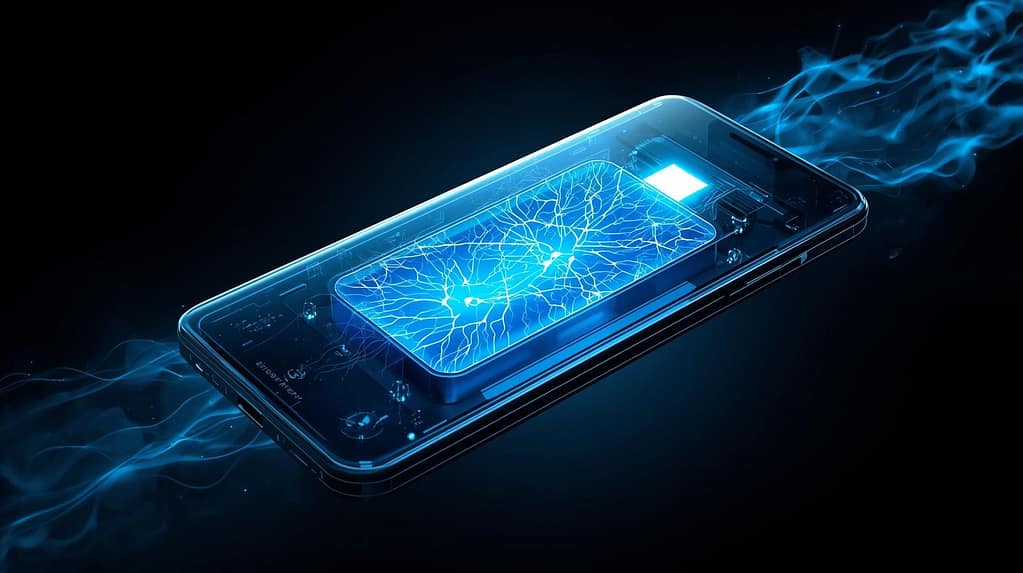
What a Solid-State Battery Actually Is and Why It Matters So Much for AI Phones
Beyond handsets lies a need to grasp how power sources work – knowing distinctions among lithium-ion, silicon-carbon, and actual solid-state cells transforms mere data into meaningful insight. Without that base, details stay flat, disconnected from real function.
Moving lithium ions through a liquid electrolyte connects the graphite-based anode and cathode in typical lithium-ion cells. Though essential, that fluid poses major risks – its flammability explains why such batteries sometimes ignite if harmed or too hot. Each time charging happens, chemical wear builds up, so capacity drops noticeably over hundreds of cycles. Charging speed stays restricted because pushing more current creates unsafe temperature rises. Performance fades gradually, tied directly to how often energy moves back and forth inside.
Instead of using a liquid core, solid-state batteries rely on a firm substance – often ceramic or a rigid polymer – to move lithium ions efficiently, sidestepping risks like fire or breakdown common in traditional setups. Because this setup is more stable, engineers can swap out graphite anodes for ones built entirely from lithium metal, pushing storage capacity much higher. Prototypes crafted by Samsung SDI reached about 500 watt-hours per kilogram, nearly doubling what standard lithium-ion units offer today. In early 2026, findings detailed in Nature Communications revealed how scientists from KAIST restructured the internal layout of such batteries, achieving up to fourfold improvement; their method avoided costly materials while delivering results, backed financially by Samsung Electronics’ future-focused initiative.
AI phones face a growing challenge with power supply. As tasks like constant voice assistance, ongoing data analysis, real-time language conversion, along with localized machine learning run continuously, they demand steady computing effort – something current lithium-ion technology was never built for. When these devices heat up due to prolonged AI activity, their speed drops just when users need peak function. Unlike conventional designs, solid-state units address such issues directly through physical upgrades. Because they pack more energy into the same space, initial capacity increases noticeably. Charging happens much quicker, turning what once required timing near a plug into a brief pause anywhere. Since they manage temperature far more effectively, extended AI usage no longer leads to overheating problems typical of older cell types.
Midday power loss could ruin even the smartest phone’s performance – especially when heavy AI features drain energy fast. A machine learning chip may promise speed, yet without efficient power storage, gains fade early. Inside each of these top seven models sits a battery built for demand, though not all manage load equally. Performance depends less on processing strength and more on how well the cell handles constant computation. Some rely on dense lithium variants; others adjust output through adaptive voltage gates. Longevity under strain separates average from exceptional. Real-world use shows which designs sustain function past lunchtime. Power delivery shifts quietly behind every recommendation we made. Energy density matters just as much as neural engine claims. Without stable discharge curves, advanced tools become sluggish after hours.
The Bridge Technology That Is Already in Your Hands: Silicon-Carbon Batteries
Not until after 2026 did smartphones begin shifting past traditional lithium-ion designs, when a new battery type emerged – already on shelves – offering real gains without waiting for full solid-state promises. Though not the final step, this version moves clearly beyond older models reliant on graphite anodes, marking noticeable progress in how energy gets stored. Available today, these devices introduce improvements once thought just around the corner. Instead of holding back for perfection, manufacturers introduced something workable, better, now. Each upgrade reflects lessons learned through trial, not theory.
Instead of graphite, newer batteries use a mix of silicon and carbon in the negative electrode. Tenfold more lithium fits into silicon than graphite when measured by weight. Because of this trait, identical-sized devices store far greater energy. By early 2026, leading smartphones began using these cells – models like OnePlus 15 and Xiaomi 17 Ultra carried them. Their power levels reached between 7,000 and 9,000 milliamp hours within normal phone dimensions. Previously, top-end handsets seldom crossed 5,500 milliamp hours unless they became noticeably bulky.
A single morning of heavy tasks once drained half a modern smartphone by noon – now imagine finishing those same hours with nearly half the charge still left. Phones built in 2026 carry a 9,000 mAh power source using silicon-carbon chemistry, fitting neatly where older models held just 5,000 to 5,500 mAh units. Instead of crawling toward empty during intense workflows, devices now maintain stamina well past sunset without plugging in. Where lithium-ion flagged under constant load, this newer material delivers roughly two-thirds more stored energy within identical dimensions. Models already on shelves include such cells, shifting what users expect from daily endurance. Previously unreachable margins become routine; fatigue fades when supply outpaces demand.
Despite containing silicon, this blend does not qualify as solid-state technology. A liquid electrolyte remains part of its design. Degradation happens across charging rounds – just at a reduced pace compared to traditional graphite. Most people buying phones in 2026 will gain greater practical benefit from these 7,000 to 9,000 mAh silicon-carbon cells than by holding out for upcoming high-end devices powered by full solid-state systems.
1: Samsung Galaxy S26 Ultra and the Solid-State Transition Strategy
While Samsung leads in solid-state battery innovation for consumer devices, it holds back on using the tech in top-tier phones. Its progress stands out, yet timing remains tightly controlled. Advancement does not mean immediate rollout here. Caution shapes deployment more than capability. Even with breakthroughs, patience defines the approach. The company moves fast in labs but slowly in products.
A breakthrough emerges from Samsung SDI – batteries using solid electrolytes reach 500 Wh/kg. Testing confirms function; they charge to 80 percent within nine minutes. A collaboration links the company with BMW and Solid Power, targeting test models by late 2026. Double today’s lithium-ion capacity fits into the same space. Charging speed shifts expectations – current rapid systems now seem outdated. Safety gains stand apart: no chance of combustion under normal conditions.
Samsung moves carefully in the smartphone space during 2026. According to PhoneArena’s early-year report, Samsung Electro-Mechanics aims to start large-scale production of solid-state batteries for wearable gadgets – namely the Galaxy Watch and Galaxy Ring – before December 2026 ends. Such a strategy reflects how the company handles new tech: test it first in compact, limited-output products with less exposure to failure. Only after proving reliability does expansion into high-demand areas like flagship phones follow. Devices such as the Galaxy Watch serve as live trials for battery systems meant later for top-tier Galaxy S models.
Ahead of its time, the Galaxy S26 Ultra arrived in February 2026 featuring silicon-carbon battery innovation now setting benchmarks across premium smartphones. Because the Snapdragon 8 Elite Gen 5 delivers a 40% gain in NPU speed, expanded battery capacity avoids overheating issues once common in earlier lithium-ion designs during heavy AI workloads. Meanwhile, more than 40 patent filings by Samsung reveal persistent progress in oxide-based all-solid-state energy storage – proof of sustained research effort behind next-gen power systems.
Looking ahead, real solid-state batteries from Samsung probably won’t hit smartphones before the S28 or S29 models. While 2026 may bring such tech to wearables, phones follow later. The S26 Ultra uses top-tier silicon-carbon cells now common in high-end Android devices. Anyone holding out for Samsung’s version inside a handset might need patience – chances are it arrives around 2028. Though progress moves forward, major shifts take time. Expectation should match pace. Not everything appears at once.
2: Xiaomi 17 Ultra and the Silicon-Carbon Giant That Already Changed the Market
Xiaomi charges ahead where others pause – while Samsung inches forward with caution, the 17 Ultra bursts through limits. Its silicon-carbon battery defied expectations, packing unheard-of specs into a sleek body years earlier than predicted. What was deemed impractical by 2026 standards arrived, fully realized, under Xiaomi’s bold push.
A demo by Xiaomi, spotted in early 2026 through Android Central’s reporting, revealed a working model of the Xiaomi 13 equipped with a solid-state battery – its power level up nearly a third compared to the standard release. Despite this step forward, the decision behind the Xiaomi 17 Ultra leans into now-available materials: its silicon-carbon cell holds between 7,000 and 9,000 mAh, suggesting progress isn’t held back while next-gen options mature. Instead of pausing for future breakthroughs, the choice reflects an effort to push limits using what functions today. Advancement here moves not by waiting but fitting stronger parts into devices already on shelves.
Charging moves fast at Xiaomi. A 300W setup inside the Xiaomi 16 Ultra pushes power from empty to complete within about 12 minutes, whereas future models by 2026 keep pace yet pack more energy into each charge cycle. Because batteries grow larger without slowing recharge rates, dropping below half rarely lasts long – topping up often finishes before someone steps out of the shower.
Starting with efficiency, the Xiaomi 17 Ultra delivers long battery runtime, quick recharge cycles, along with stable heat control when running intensive AI tasks – ideal for those seeking near solid-state perks before such phones arrive. Although not fully built with solid-state tech, its mix of silicon and carbon materials offers a practical alternative today. Working together, Leica and Xiaomi shaped the imaging setup, while the Snapdragon 8 Elite Gen 5 processor ensures top-tier speed across functions. Because of this blend, strong power endurance comes hand in hand with elite-level capabilities elsewhere.
3. Apple iPhone 17 Pro Max Uses Stacked Battery Design
Battery tech shifts in 2026 see Apple moving at a different pace compared to Android makers; this contrast stems less from resistance to change but more from unique engineering demands and long-term reliability goals. Though rivals push rapid adoption, Apple weighs durability alongside innovation – timing adjustments around material stability matter just as much as performance gains. Constraints shape choices here: tighter integration between hardware and software means upgrades require deeper validation. What looks like caution might instead be precision. Priorities diverge – not because Apple avoids progress, but because its definition of readiness includes factors others may overlook.
One reason the iPhone 17 Pro Max won’t feature silicon-carbon anodes lies in Apple’s current strategy, as reports from analysts suggest solid-state models aren’t arriving soon. Instead, layered cell construction appears to be their path forward – a method placing several cells on top of one another to better fill unused space inside the phone. This approach increases capacity while avoiding shifts in electrode materials entirely. So rather than altering chemical composition, the focus lands on physical layout improvements within the device.
Despite using traditional lithium-ion tech, the iPhone 17 Pro Max lasts noticeably longer on a charge compared to earlier models. This improvement emerges from layered battery design, more efficient processing via the A19 Pro chip, while refined power handling across recent iOS versions also plays a role. Gains seen in 2026 reflect careful tweaks, not radical change. What stands out is steady progress achieved without adopting next-gen silicon-carbon materials.
Caution from Apple regarding silicon-carbide use in its 2026 iPhones signals how tightly it links innovation to dependability. Though these batteries store more energy, their tendency to expand during charging exceeds what traditional graphite designs exhibit. Because iPhones demand exact fit within slim enclosures, handling such expansion calls for precision most makers lack – precision Apple appears to be refining behind the scenes. Observers tracking component flows suspect the shift may arrive with the iPhone 18 lineup. By then, real-world endurance could stretch beyond two days, matching high-end Chinese models already achieving this mark years earlier under different market pressures.
The iPhone 17 Pro Max stands as Apple’s top offering in 2026 for those fully invested in its ecosystem and seeking peak battery performance today. Yet, if Android devices enter the picture, the difference in battery capability between Apple and high-end Android models grows larger than it has been in recent memory.
4. OnePlus 15 Features Fast Charging Solid State Tech
Fast charging remains central to OnePlus’s identity. By 2026, the OnePlus 15 brings silicon-carbide tech into real-world relevance. Instead of theoretical gains, it delivers quicker top-ups during short breaks. While others chase specs, this model emphasizes usable efficiency. Charging behavior changes subtly – less planning around outlets. Because power replenishes faster, downtime fades from routine. For everyday users, that shift matters more than peak numbers. Though materials aren’t new, their application here feels fresh. It runs without fanfare, yet alters how people interact with battery life. In practice, convenience outweighs novelty.
One early look at 2026, from TechRadar in January, put the OnePlus 15 on the map – among the first major phones using silicon-carbon batteries. With capacity hovering near 7,000 mAh, performance shifts noticeably when paired with OnePlus’s rapid 100W+ charging system. Roughly twenty to twenty-five minutes delivers around 80 percent charge. That kind of speed turns a midday plug-in, maybe during lunch, into something quietly transformative – a drained evening battery barely registers as a problem anymore.
Heat control sees a step forward in OnePlus’s latest lineup, tackling an issue that once held back rapid charging from being truly usable. Earlier models pushed power so aggressively that devices would overheat, slowing down charge rates and weakening overall responsiveness during heavy tasks. Now, sensors track warmth levels inside the battery nonstop, shifting how energy flows based on real-time conditions. Instead of sudden drops in speed when things get hot, the system eases adjustments – keeping efficiency stable while staying within safety margins. Performance stays consistent, even when powering up quickly under pressure.
A fresh charge each morning doesn’t stick around long for some users, especially when weak endurance pairs with sluggish top-ups. The OnePlus 15 tackles this gap using silicon-carbon cells alongside rapid recharge capabilities. While its total power storage isn’t class-leading, blistering speeds shift focus away from raw numbers. Real-world performance often counts more than datasheet stats suggest. How much juice fits inside becomes secondary if it refills fast enough.
5. Phone 5 Vivo Oppo and China’s move to solid state
In recent years, China’s mobile device sector moved faster than Europe or North America on fresh power cell innovations; by 2026, models from Vivo alongside Oppo explore features still absent among top-tier releases from Samsung, Apple, or OnePlus. Though similar ideas exist elsewhere, execution lags behind what these brands now offer domestically.
Back in early 2026, Android Central pointed out how Vivo is advancing silicon-carbon batteries up to 12,000 mAh within regular phone dimensions. Honor launched the Power 2 in China featuring a 10,080 mAh cell based on silicon-carbon chemistry – something unachievable until recently with traditional graphite-based lithium-ion designs. Yet these aren’t odd gadgets made only to showcase huge power storage. Instead, they pack top-tier screens, advanced cameras, ,strong processors and while delivering real-world endurance stretching across multiple days between charges.
Working on new battery designs, Oppo’s research team explores solid-state and semi-solid versions capable of charging at 150W or more – speeds ahead of today’s market offerings. Instead of fully liquid electrolytes, semi-solid types use gels or partially solid electrolytessuch as, making them safer and slightly denser in energy than standard lithium-ion units. While full solid-state remains complex to produce widely, these hybrid variants simplify large-scale manufacturing. At CES 2026, evidence emerged that shrinking such tech into compact devices is now feasible; one example was Better Mobility Xperience’s SolidSafe portable chargers. Because smartphones demand tiny yet powerful sources, progress like this fits neatly into real-world mobile needs.
When shoppers look for the biggest battery possible in a phone on sale by 2026, models from Vivo and Oppo stand out – despite their limited reach outside China. These latest devices run on silicon-carbon tech, packing power levels unlikely to appear in Western handsets before 2027. While global access and long-term software updates might lag behind offerings from Samsung, Apple, or OnePlus, performance edges remain notable. Buyers open to non-Western options could gain early access simply by choosing differently. Still, trade-offs exist beyond just brand familiarity.
The Verdict on Buying Now Versus Waiting for True Solid-State?
Faced with uncertainty, each hesitant purchaser wonders – truthfully – the same thing: whether they should move forward. A clear response matters here, not the vague maybe typical of so much tech guidance out there. What counts is honesty without padding, simply put.
A shift happened quietly by 2026 – phones no longer demand constant attention. For anyone holding a device made in 2022 or before, the change is stark. Flagship models from Xiaomi, OnePlus, and top-tier Vivo and Oppo lines now run on silicon-carbon batteries. These replace older graphite anode lithium-ion units that maxed out at 4,500 mAh. In contrast, new builds pack up to 8,500 mAh. That gap isn’t small – it reshapes behavior. Charging stops being a daily calculation. Instead, usage flows naturally, uninterrupted by power anxiety.
With a 2024 high-end device powered by a 5,000 to 5,500 mAh lithium-ion cell, expectations shift slightly. A jump to silicon-carbon batteries ranging from 7,000 to 9,000 mAh brings real change – something users would feel each day. When short battery span frustrates most, stepping up to a 2026 silicon-carbon model clears that hurdle. Yet should today’s endurance suffice and solid-state tech be the goal, patience matters: Samsung likely arrives there between 2027 and 2028. Apple might reach it earlier, around 2027 with the iPhone 18. Meanwhile, top-tier Chinese phones could deliver such advances sooner, perhaps as early as 2026.
Picking the right phone ties closely to what system you already use, along with personal needs. If top-tier silicon-carbon power matters most – paired with high-end features in every area – look at the Xiaomi 17 Ultra. Speedy charging and smooth software define the OnePlus 15, making it stand out among similar builds using the same advanced materials. Those leaning into Samsung’s world may find the Galaxy S26 Ultra fits best, combining solid craftsmanship, long-term updates, and modern battery tech. When locked into Apple, the iPhone 17 Pro Max serves as today’s choice; yet real progress in energy storage probably waits until the 2027 model arrives.
Now, the shift in smartphone batteries is unfolding through phases. Silicon-carbon marks the current phase – already here. What comes next? True solid-state tech finishes the transformation. Progress moves faster than before. The distance between present capability and future potential shrinks by the year. This change feels real because each step builds on what came just months earlier.