
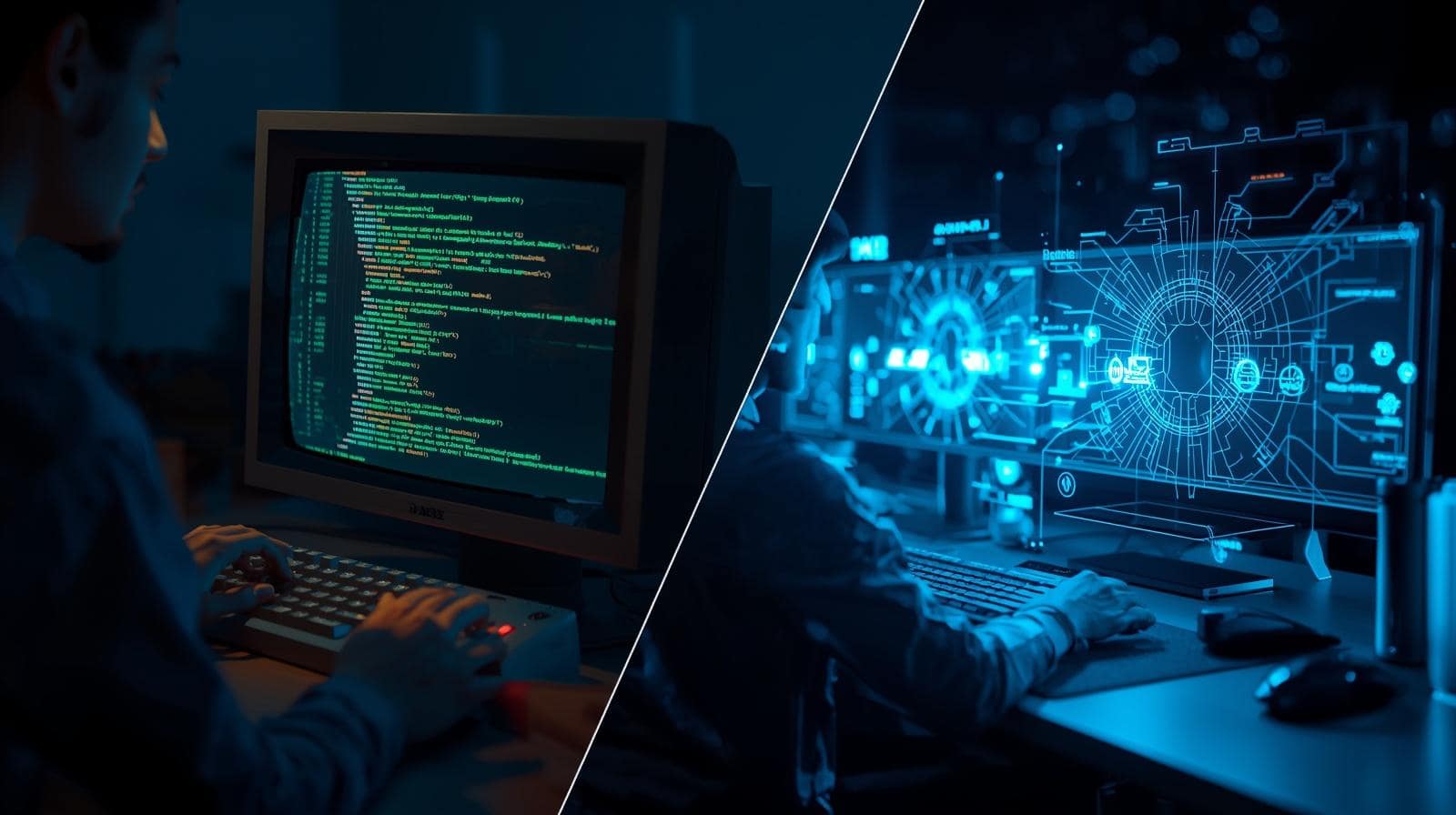
In 2026, building software looks nothing like it did a short while back. Rather than merely helping out, artificial intelligence now shapes every stage of coding, checking, and releasing programs. As worldwide tech investment nears $5.6 trillion that year, adapting quickly means more than progress – it becomes essential to remain relevant.
Here are the seven software development trends in 2026 that are reshaping the industry right now.
1. Development now runs on AI
Working entirely without help from artificial intelligence in software creation by 2026 means taking a longer path than needed. Tools such as GitHub Copilot, Cursor, or Amazon CodeWhisperer now belong in the essential category – no longer just interesting experiments.
84% of developers currently use artificial intelligence in their regular work tasks. Not limited to suggestions anymore, these systems build full functions, draft testing scripts, and create documentation rapidly. Gartner expects nearly all corporate software engineers to rely on AI helpers by 2028. Success next year belongs not to those resisting machines but to people amplifying results through them.
2. The Growth of Independent AI in Software Development
Starting each time differently, these systems go further than basic helpers. Instead of sitting idle until prompted, they take initiative on their own. Task planning comes naturally to them; they use external tools when needed. Without relying on repeated guidance, they move through complex sequences independently. What sets them apart is this self-driven behaviour, unfolding step by step.
By 2026, artificial intelligence systems will take charge of full stages in software creation – drafting requirements, generating code, testing functionality, overseeing deployment, tracking real-time behaviour. By 2028, roughly one in three business applications will rely on such self-directed tools. Though unseen, their presence reshapes how digital products evolve.
3. Security is built in, not added on
By 2026, cybercrime could drain $10.5 trillion from the world economy each year. Tacking security onto a finished project often leads to failure. Security built into development from the start has become the norm across industries.
Security tools such as Snyk and Aqua scan code automatically within CI/CD workflows. Because trust is never assumed, zero-trust models define minimum standards today. By 2026, developers will take responsibility for safeguarding their applications.
4. Low Code No Code For Everyone
A shift gaining momentum? It’s not about programming languages. Instead, it’s non-developers creating apps without writing traditional code. By 2026, most new business software – around 70 per cent – will come from low-code or no-code platforms, according to Gartner.
Now here’s something engineers appreciate. When non-specialists build basic apps through systems such as Microsoft Power Apps, qualified professionals gain time – time redirected toward intricate system design and advanced security tasks beyond what any point-and-click interface offers.
5. cloud native architecture as standard
By 2026, calling something “cloud-native” feels outdated – most systems assume it. Running on microservices and containers, these setups grow easily when demand rises. Serverless components make scaling automatic, almost invisible.
Now here comes a shift: more than 15 million coders worldwide use cloud-native methods today. As forecasts suggest the cloud sector could exceed $5 trillion by 2034, skills in Kubernetes and serverless systems matter just as much as the basics once did. For committed builders, such expertise isn’t rare anymore – it’s expected.
6. Tiny Super Teams with AI Help
One by one, large engineering units are shrinking. By 2026, small groups – just two or three experts – are becoming more common. These compact teams rely on artificial intelligence to match the work once done by many. Instead of crowds of coders, focused individuals get results. Efficiency shifts toward minimal crews powered by smart tools. What used to take a village now happens in a trio.
By 2030, according to Gartner, eight out of ten companies will adopt flexible teams powered by artificial intelligence. Workers able to handle every phase – from design through deployment – with smart tools stand at the top of hiring priorities come 2026.
7. Rust and Go Advance in Programming Popularity
Rust plus Go now lead core systems work by 2026 – though Python still runs AI. Behind the scenes, infrastructure relies heavily on its speed.
Few companies bet on systems languages – yet Rust stands firm. Its design blocks entire classes of bugs before code runs. Google relies on it for Android internals; Microsoft applies it extensively across Windows layers.
With its straightforward design, Go stands out in building cloud-native systems. Thanks to strong handling of concurrent tasks, it powers many modern microservice architectures. Simplicity drives adoption across distributed environments. Efficiency in execution makes it a frequent choice for scalable backends.
Are You Ready for What Comes Next? By 2026, worldwide software revenue could reach $800 billion. What separates creators from non-creators now matters less – speed once slowed progress, yet security demands shift just as quickly.
The top developers in 2026 won’t stand out for a single programming language; instead, flexibility will set them apart. While some dive into Agentic AI, others adopt DevSecOps – speed matters more than keeping up with change. Though skills evolve rapidly, staying ahead means adjusting before the shift.