


Thinking of purchasing a drone by 2026? Spending wisely matters when choosing the right one.
Speed defines today’s drone industry more than at any point before. During March, fresh designs entered the marketplace. Regulatory updates took effect one month earlier, in February. Availability may shift for certain businesses due to limits on incoming shipments.
Here lies a real challenge for those looking to purchase. One option is choosing between the latest release or going with the prior year’s edition to reduce cost. Questions arise about whether today’s drone will meet regulations in the coming weeks. Some functions prove useful, yet others appear only as promoted claims. What stands out now might not hold value later. Decisions hinge on practicality, though clarity often feels distant.
Consider these points carefully. Determined by cost, ability, and purpose, the ideal drone varies per person. Money available shapes options clearly. Experience influences performance needs directly. Intended activity defines required features precisely.
Wrong choices happen often. Some pick models far beyond their actual needs. Others settle for less, only to feel dissatisfaction soon after.
This guide presents seven drones worth considering for purchase in 2026. Availability within the United States applies to every model shown here. Purpose defines each selection, shaping its role clearly. Specific user needs determine the right match for any given device. Information about ideal buyers follows naturally for each option listed.
What remains are only models offering peak performance for the price at this moment. Sponsored placements do not influence these selections. Empty promises have been removed without exception.
What Changed in the Drone Market in 2026
Early 2026 brought three key changes. To grasp these is to gain clarity when choosing what to buy. Yet insight comes only through careful review of each shift.
Not every small drone fits the updated rules. Broadcast of position data is mandatory under current FAA policy. Compliance appears in each model listed here. Clearance deals may include older units lacking this feature. Recently purchased devices must show Remote ID capability. Rules shifted once weight passed a quarter kilogram.
Now, self-flying systems driven by artificial intelligence are common even in moderately priced drones. What required a budget of $2,000 just twenty-four months back is found on devices costing $600 today. Avoiding obstacles comes built-in. Following subjects adjusts automatically. Flight routines set themselves without extra cost. Premium labels have faded from such capabilities.
Now consider batteries – progress here has been notable. Some models offer flight durations extended from half an hour to forty-five minutes. Practical drone usage shifts because of this increase. Larger surveying jobs become possible without interruption. Reaching remote areas is more feasible when return travel remains within safe limits.
Among recent findings, an 8.3% yearly rise marks the commercial drone sector, per data from Pilot Institute. In contrast, leisure-based usage shows decline across certain areas. What stands out becomes clear only when both trends appear together. Tools of profession slowly replace what once amused. Though play remains, work defines their path now.
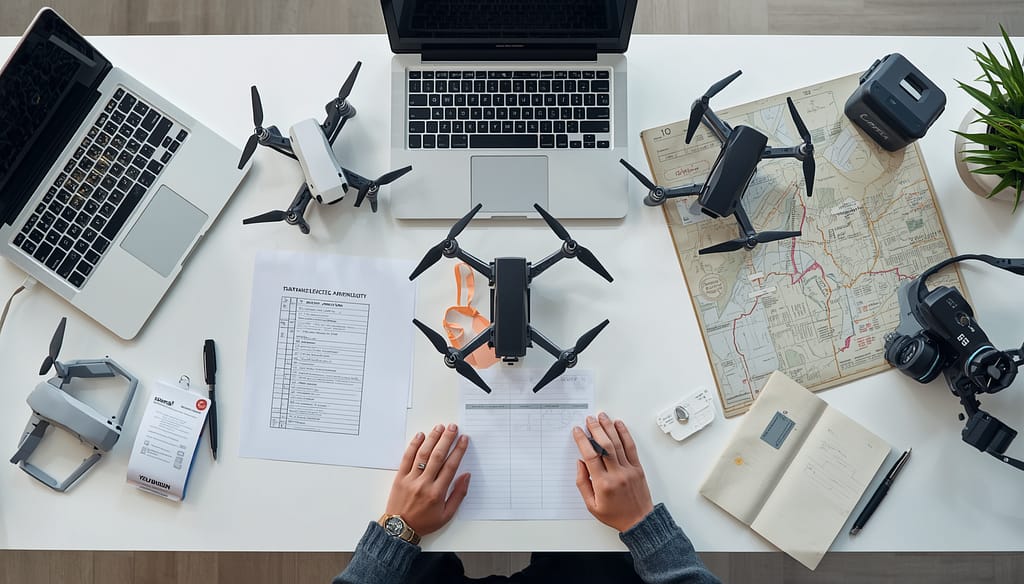
How to Choose the Right Drone in 2026
Specifications dominate most purchasing advice. Think megapixels first. Or signal distance. Maybe how many directions the stabilizer moves. These points hold weight. Yet none form the proper beginning.
These four inquiries come first. A beginning forms around them. From here, clarity may follow. Questions like these set a path.
Should photography during travel be your goal, a distinct type of drone applies. Yet when the purpose shifts toward generating income through property visuals, entirely separate gear becomes relevant
Consider how frequently flight becomes part of routine. Twenty minutes spent assembling a device reduces likelihood of consistent operation. When usage drops below once each week, ease of transport along with fast preparation outweighs peak capability. Ultimately, convenience shapes frequency far more than power ever does.
Consider what amount you can truly spend once extras are included. Not every expense ends at the device itself. Additional power cells become necessary. A protective container helps during transport. Coverage might be wise depending on usage. Regulatory approval may apply should income come from flights. Set aside about three-tenths above the listed number before deciding.
Most frequent flights – where do they happen? Unlike country zones, cities enforce distinct rules. Below 250 grams, drone limits tend to relax. One detail alone could shape the decision.
Truth emerges when these four questions receive honest answers. Obvious choices follow clarity. Skipping happens often among shoppers. Unused features guide most purchases instead of purpose.
Best Overall Drone 2026: DJI Mavic 4 Pro
The camera operator arrives carrying a DJI Mavic 4 Pro – no exceptions. That model defines what serious imaging gear looks like now.
Three cameras operate within a single aerial unit. Designed by Hasselblad, one holds a 50-megapixel wide lens. Another features a 70mm mid-range telephoto element. The third uses a 166mm long-reaching scope for faraway details. Each sensor records at once during operation. Multiple angles emerge from just one mission.
Under calm skies, flight lasts up to fifty-one minutes. In typical settings, expect forty-three through forty-six. This added span addresses real challenges. Reaching distant sites becomes possible. Thorough checks are completed uninterrupted. Several recordings happen midair – no battery change needed on the ground.
Darkness does not block detection. Sensors that see every direction, combined with LiDAR, guide the system. Such capability becomes relevant during industrial inspections. Challenging flight conditions also make it significant.
Recording video in 6K at sixty frames each second offers resolution beyond typical needs. Despite that, extra pixels allow room to adjust framing later. Shaky clips become smoother through digital correction. Close-ups emerge clearly when zooming into scenes. Image integrity stays intact throughout these changes.
Cost presents an immediate barrier when compared to moderately priced options. Size becomes a limiting factor due to bulkier construction versus compact models. Operation readiness comes later because preparation demands extended effort. Mastery of capabilities unfolds slowly, needing sustained engagement over weeks. Obvious limitations emerge without delay.
Should your work demand flawless image quality, the Mavic 4 Pro becomes relevant. When client expectations center on high-end results, this model fits naturally. Reliability matters most during paid assignments – here, it proves its place. Yet infrequent flights, just once every few weeks, remove much of its purpose.
Costs between two thousand one hundred ninety-nine dollars and two thousand nine hundred ninety-nine dollars, based on package selection. Should you choose the extended version, additional power cells come included – this addition often justifies the higher price point.
Best Portable Drone 2026: DJI Mini 5 Pro
What matters goes beyond compactness. Weight below 250 grams brings fewer restrictions, shaping how freely it can be used.
At 249 grams, the Mini 5 Pro slips beneath a critical limit. Just one gram less makes a difference. Flight becomes possible in additional zones. Rules for registration grow less complex. Where heavier drones are barred, access opens for devices below 250 grams. Location options expand without notice.
A single-inch sensor sits inside the device. Much bigger than what earlier Mini versions had. In dim settings, results shifted noticeably. Images taken after dark hold actual clarity. Range across light levels grew wider. Hidden tones emerge when pulling back shadows or bright areas.
With a 120-frames-per-second capture, it records 4K video. Because of this speed, slow motion appears fluid. Cinematic quality emerges during dynamic scenes. Sharp detail holds even with rapid movement.
For the first time in a compact drone, sensors cover every direction. Earlier versions relied solely on front and lower detection systems. Now, the Mini 5 Pro identifies barriers around it completely. Movement in reverse gains reliability. Confined areas become simpler to pass through.
Thirty-eight minutes marks the official flight duration. In actual conditions, flights last between 32 and 35 minutes. This span suffices for typical leisure flying. When tasks involve several sites, however, the window feels narrow.
A distance of 12 kilometers defines the reach of the signal. Flying this far would break regulations. Despite such limits, a powerful link ensures stability where disruptions occur.
Should travel often be part of your routine, the Mini 5 Pro becomes relevant. Regulatory adaptability might guide your choice toward this model. Where compact size plays a role, this device fits naturally. Image quality at the highest tier will require looking elsewhere.
Starting at $999, the drone comes by itself. For $1,349, the Fly More Kit offers more parts together.
Best Value Drone 2026: DJI Air 3S
The Air 3S occupies a balanced position between cost and capability. With pricing set near half that of top-tier models, it achieves roughly four-fifths of their output. Performance remains strong without matching the full expense. Value emerges quietly through this alignment.
With two lenses working at once, one captures broad scenes using a large sensor and high resolution. The second focuses on tighter framing through a longer focal reach. While both operate together, positioning remains unchanged yet options grow. Composition adjusts freely due to overlapping image capture. Flexibility emerges naturally when shots align in real time.
Under ideal circumstances, flight lasts up to 46 minutes. Typically, users experience between 39 and 42 minutes during actual operation. Greater power storage – when set against the Mini line – proves significant. Extended missions become feasible, easing concerns about mid-task failure.
Now included on the Air 3S is forward-facing LiDAR, introduced this year. Thin objects such as power lines are within its detection range. Low-light environments no longer limit flight capability. Until just lately, only higher-tier models offered this function.
From any direction, obstacles are avoided. Following movement comes into play when subjects shift position. Reliably, ActiveTrack 6.0 locks onto individuals. Vehicles also remain within its focus. Even with objects briefly blocking view, tracking continues without interruption.
Heavier by design, at 720 grams this model falls under tighter rules compared to lighter versions below 250 grams. Registration with the FAA becomes mandatory. Some zones remain off limits due to flight restrictions.
Despite solid imaging quality, it falls short of top-tier standards. Smaller sensor dimensions appear when compared to the Mavic 4 Pro. Limited dynamic range becomes noticeable in high-contrast scenes. In dim lighting, results remain usable though far from outstanding.
Choose the Air 3S when seeking capable performance without high-end expense. Should flights occur often, its price becomes reasonable over time. Prior skill in images or motion pictures makes this model a logical fit. Portability matters most? Then another option serves better.
A cost of $1,,099 applies to the base model. With it, spending rises to $1,429 when choosing expanded gear inclusion.
Best Budget Drone 2026: DJI Neo 2
Most low-cost drones below three hundred dollars serve little purpose beyond playthings. Yet here stands the Neo 2 – different by nature.
Thirteen and a half decagrams is its mass. In many regions, flight occurs legally without registering a remote unit. A generous pocket holds it fully. Less than one minute covers preparation start to finish.
What stands out most is how it begins – launched directly from the palm. A simple toss upward sets it in motion. Once airborne, it remains steady in place. Following movement happens without prompting. Return occurs naturally, settling back into the hand after use ends. Basic functions work entirely without a remote device.
With this, social media visuals become effortless. Hiking along, the need arises for a view from above. The Neo 2 is removed. It takes flight. Imagery is recorded. It returns to ground. The path ahead continues.
Forty-kap footage arrives at thirty stills each second. Suitable for social clips, though not quite right for paid projects. Limited contrast handling shows in mixed lighting. When light fades, results grow grainy. Despite high resolution, shadows lack detail.
Official flight duration stands at 23 minutes. In practice, expect between 18 and 20. One continuous recording uses a full charge. Additional power units become necessary under sustained operation.
Preset flight paths come included. A Dronie moves away while rising. Circling rotates around a subject. The helix spirals upward. Spotlight keeps focus locked during motion. Dynamic footage emerges, even without manual control. New users capture strong visuals right away.
At just 2.5 kilometers, the reach of transmission falls short for professional photography tasks. Still, it meets basic needs for casual hobbies. Beyond that limit, performance drops off sharply.
Should photography be your main goal, this model falls short. When capturing casual moments matters most, consider choosing the Neo 2. For those still deciding about flight enjoyment, it serves well. Spontaneity in shooting benefits from its presence. A secondary option suits it better than first choice.
At $299, the drone comes with a single battery. Choosing the $449 option makes more sense when multiple batteries are needed.
Best FPV Drone 2026: DJI Avata 2
Unlike camera drones, FPV models operate in a distinct manner. Flight behavior varies noticeably between the two types. Sensation during control is not the same across both systems. Visual output produced by each differs in nature.
Flying fast, the Avata 2 comes from DJI as a personal drone choice. Reaching 60 miles per hour, speed becomes one of its traits. With flips and quick turns, movement feels alive in motion. Recording what the pilot sees happens smoothly during flight.
With these goggles, vision shifts into another perspective entirely. What the drone captures appears without delay. Movement feels guided by instinct rather than control. Responses to barriers emerge as if present in the environment itself.
One way to operate involves movement tracking through gestures. Moving the hand ahead initiates forward flight. This method needs no prior flying knowledge. Another alternative gives complete command using standard remote inputs. Skilled users may prefer this mode for precise handling.
From a static frontward position, the lens stays locked. Movement along vertical axes remains impossible mid-flight. Common within first-person view setups, such positioning holds normative status. Energy pulses through each recorded sequence in rhythmic bursts.
Despite reaching 4K resolution with 60 frames each second, the video relies on digital stabilization. Footage appears sharp when used for first-person viewing experiences. However, smoothness falls short compared to drone cameras balanced by mechanical gimbals. Though functional, it remains a step behind in motion control precision.
When crashes occur, protection matters. Propeller guards come already installed. Flying in first-person view often means fast maneuvers. Learning involves mistakes. These shields reduce harm to the machine.
Choose the Avata 2 when capturing dynamic motion scenes matters. Its flight dynamics appeal strongly to those who value piloting sensation. Real estate imaging benefits appear during indoor navigation tasks. Traditional sky-based image capture remains outside its core function.
Price is $1,199 for the full combo including goggles and controller.
Most Innovative Drone 2026: Antigravity A1
Simultaneous capture defines the Antigravity A1 – unique among consumer drones. Nothing else records all at once.
Six cameras form a spherical layout. From there, coverage spans every direction. The full surroundings appear. Each viewpoint is captured. All angles become visible.
After the flight comes where changes take place. Framing choices appear once recording ends. A view facing ahead becomes possible through selection. The opposite direction also opens up by choice. Following something originally out of sight gets done just as easily.
Now the process of capturing shots shifts entirely. There is no demand to predict ideal composition while the drone flies. Attention turns toward motion instead. The route through the air gains importance. So does the moment of release. Choices about layout appear later, inside post-production.
Eight-thousand pixels span every axis. Detail reaches levels suitable for expert use. Quality of assembly now far exceeds earlier models. Improvements emerged sharply after initial versions.
Steepness defines the early phase of skill acquisition here. A shift in perspective becomes necessary when framing visuals. Post-capture processes demand close attention over time. Some experienced operators feel unbalanced at first, adjusting slowly.
Enormous file volumes emerge from brief operations. During a single five-minute span, data exceeds 100 gigabytes. Handling such volume demands robust infrastructure. Performance hinges on scalable systems.
For those making unconventional projects, consider the A1. Those building virtual reality scenes may find it suitable. Creative control beyond standard drone limits could be yours. First-time pilots should look elsewhere.
At three thousand nine hundred ninety-nine dollars, precision tools serve narrow applications. Such gear targets exact functions, not broad utility.
Best Drone Under $500: DJI Flip
Some financial advice focuses on cutting expenses. This approach stands apart. Value here matches what you pay, without exaggeration.
With a 60 fps recording capability, it captures 4K footage clearly. Stabilization remains steady during movement due to its three-axis gimbal system. Despite cost constraints, image output performs beyond typical standards.
Positioning stays accurate through GPS signals. Home return activates without fail each time needed. Loss of the drone becomes unlikely under normal conditions.
One might expect half an hour aloft, yet actual flights last between twenty-six and twenty-eight minutes. This duration still suffices for casual photography sessions. Official estimates stand at thirty-one minutes. Still, real conditions tend to shorten airborne periods slightly.
Though obstacle detection is present, it remains limited. Sensors face forward and down, nothing more. Careful piloting is required at all times. Recovery from errors cannot be guaranteed by the system.
Screen output relies on a mobile device. Cost efficiency results from this design choice. Performance remains acceptable under average light conditions. Visibility issues appear when sunlight is intense.
Tracking a subject functions adequately. Despite lacking advanced refinement found in premium versions, it maintains basic performance. At times, the system fails to retain focus on the target. Reengagement depends on user intervention.
Should this be your initial serious drone, consider purchasing the Flip. For solid outcomes at a modest cost, it may suit well. Learning core aspects of aerial imaging? This option supports that aim. Flagship-tier capabilities will not appear here.
At $449, its value stands clear. Despite the cost, comparisons emerge with novelty items. Functionality, however, proves present. Performance meets practical demand.
The Honest Comparison Table
| Drone | Best For | Price | Flight Time | Camera | Weight |
| Mavic 4 Pro | Professionals | $2,199+ | 51 min | Triple 50MP | 958g |
| Mini 5 Pro | Travelers | $999+ | 38 min | 1-inch 48MP | 249g |
| Air 3S | Serious hobbyists | $1,099+ | 46 min | Dual 50MP | 720g |
| Neo 2 | Social media | $299+ | 23 min | 12MP 4K | 135g |
| Avata 2 | FPV flying | $1,199 | 23 min | 12MP 4K | 377g |
| Antigravity A1 | VR creators | $3,999 | 28 min | 360° 8K | 495g |
| Flip | Beginners | $449 | 31 min | 12MP 4K | 249g |
What You Actually Need to Buy
Beyond the device itself, expenses accumulate silently. Account for these necessary items.
A full set of power cells is required. Not every charge lasts beyond a single run. With three units, the operation continues through daylight hours. Funds between one hundred and two hundred dollars cover replacements.
A well-chosen container helps preserve value. Though built with precision, these devices break easily. Protection begins at fifty dollars, rising toward two hundred depending on shell strength.
It is not just about storage – performance counts. A low-cost option might fail during high-speed tasks like 4K capture. Interruptions appear mid-recording without warning. Data may become unreadable due to instability. Better reliability comes at around forty dollars.
During training, propeller guards reduce the chance of harm. Ranging between twenty and forty dollars, they avoid expenses near two hundred. When mishaps occur, these frames block impact – protection that pays repeatedly.
Worth thinking about when drones cost a lot – insurance can help. If something goes wrong, DJI Care Refresh may step in. Liability concerns? That falls under outside policies. A couple hundred dollars each year might cover it.
A tablet holder makes the screen easier to see. Bright sun often hides phone displays. In comparison, tablets show clearer images outdoors. These supports range between thirty and fifty dollars.
The overall expense reaches between 30 percent and 40 percent above the base drone cost. Adjust plans based on that difference.
Rules To Be Aware Of
Flying within legal boundaries by 2026 depends on knowing today’s regulations. Across the country, such standards remain consistent.
Beginning at 0.55 pounds, every drone needs FAA registration. For three years, the fee stands at five dollars. A unique identifier follows upon payment. That number appears visibly on the device.
A short time is needed to complete the TRUST assessment. Completion comes prior to any initial flight activity. The internet hosts this requirement at no cost. Safety fundamentals form the core of its questions. Pilots engaging in leisure flying are required to succeed here.
Pilots flying for business must hold a Part 107 certificate. Preparation comes before the test. A formal assessment follows that stage. Legal operations begin only after approval. Typically, learners invest between twenty and forty hours. Completion leads to permitted flight duties.
Beginning flights requires drones to share ID details starting now. Broadcasts of position occur midair by design. Every model made after 2025 contains this feature built in.
Wherever flying occurs, airspace rules are in place. The B4UFLY application holds current details. Review conditions prior to each takeoff. Boundaries shift often without long notice.
Flying above individuals demands a distinct form of authorization. Typically, those who pilot only for recreation lack such permission. When using suitable aircraft, operators certified under Part 107 may proceed – but only within defined limitations.
A permitted scenario exists when recreational aviators operate after dark. Illumination designed to prevent mid-air contact must be seen at a distance of three statute miles.
Occasionally, updates arrive without warning. Visitors to the FAA site stay informed more easily. Fines appear quickly after mistakes occur.
Common Mistakes When Buying
First-time buyers make predictable mistakes. Avoid these.
A frequent mistake involves purchasing an overly advanced drone. Vacation photography rarely demands a Mavic 4 Pro. For such tasks, the Mini 5 Pro often performs more effectively. Higher spending could instead support additional power cells and add-ons.
Freedom fades when the under-249 limit slips away. At exactly 250, rules tighten without warning. Should weight play a role – crossing that line brings burden instead of ease.
A single charge limits flight time to between twenty and thirty minutes. Once familiarization with handling finishes, power runs out. Disappointment follows as everything gets packed away too soon. Beginning properly means having at least three power units ready. Without extras, the initial experience fails completely.
When purchasing refurbished drones, risk increases if the seller is unfamiliar. Crashes occur more often under such circumstances. Information about prior harm may be missing due to incomplete disclosure by past users. Choose either brand-new models or renewed units obtained through approved vendors. One wrong choice leads to avoidable setbacks.
Starting with advanced techniques without knowing simple flight skills leads to unnecessary costs. Open areas allow room for early attempts. Control of fundamental actions comes through repetition. Only after that should difficult motions be tried. Spending more happens when errors occur often.
Most small drones fail when wind is ignored. Without proper airflow awareness, flight ends early. Above fifteen miles per hour, movement becomes unstable. Forecast review prevents unintended landings. Conditions dictate whether operation succeeds.
Should something go wrong mid-flight, consequences follow. Property may be damaged by unmanned aircraft during operation. People might get hurt too. Financial exposure comes with such incidents. Protection arrives through liability coverage.
The Future Is Already Here
What felt unimaginable just a few years back now sits quietly in everyday tools. Equipment once labeled futuristic operates without notice among current systems.
Testing now begins for solid-state batteries. Reaching ninety minutes may become possible during flight. Mission design shifts when duration extends that far. Completely different approaches emerge under these conditions.
Fleets of drones now operate with minimal human input. From a single station, coordination across units unfolds smoothly. Automation handles alignment between vehicles. Real-world uses in industry have quietly taken root.
Now emerging across industries, BVLOS flight sees fast growth. Certification differs from traditional models due to extended range. Instead of sight-based control, systems rely on automated monitoring. Infrastructure checks gain efficiency through remote access methods. Delivery pathways benefit from reduced ground dependency. Progress in rules follows technological advances more closely each year.
Speed defines progress now. Years of usefulness still await these models despite shifts ahead. Still, new developments emerge faster than before.
Final Recommendation
Should budget allow for just a single drone, the DJI Air 3S stands out. Capability meets value here more effectively than elsewhere. Its range of functions fits diverse needs without raising cost. Other models fall short in comparison when overall balance is weighed.
Should ease of movement outweigh peak performance, consider the Mini 5 Pro. Regulatory flexibility offsets lower visual fidelity. Despite reduced sharpness, fewer restrictions may justify the shift.
For those exploring drone flight casually, consider the Flip. Priced at four hundred forty-nine dollars, it allows trial without heavy cost. Testing interest becomes manageable when expense stays low.
Professionals recognize the Mavic 4 Pro as standard equipment. Client expectations align with its presence.
Most hesitation leads nowhere when choice overwhelms. Whichever model fits spending limits and purpose will serve well enough. Movement begins after purchase, not before. Flying improves only through practice, never just planning.