
Under our feet, the ground begins to shift. Not long back, everyone stared wide-eyed at chatbots that could shape poems, craft messages, and even clear tough exams. A change arrived then, yet people stayed glued beside each machine. Guidance came through prompts; edits followed results; humans closed every loop on their own.
By 2026, things had already shifted for good. Step into a world now shaped by self-directed artificial intelligence.
Today’s strongest trend in technology? Fast-growing use of self-running programs that think, make choices, set steps, and then act all on their own. These tools, known as autonomous agents, handle tasks once done by people, working through problems without constant guidance. What matters most at TechTheBest is cutting past clutter to show what truly shapes tomorrow. Instead of hype, we focus on real shifts already unfolding across industries.
This shift goes beyond a routine upgrade. Rewriting core mechanics changes how companies function worldwide. Software now connects through smarter pathways, altering daily workflows. Productivity gains emerge from these evolving interactions among digital systems. Details unfold on the innovations behind this movement. Career landscapes adapt where these advances take root. Future paths form around such technological pivots.
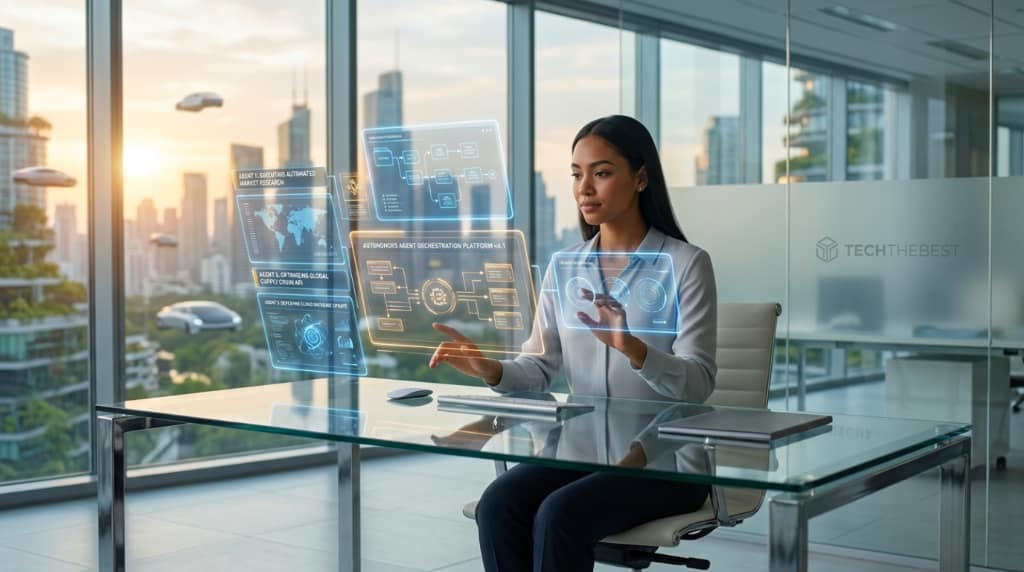
Understanding Autonomous AI Agents?
A glance at how things have changed reveals itself only when comparing standard Large Language Models (LLMs) with systems that act on their own. Though built from similar foundations, one follows prompts while the other makes moves without being told each step.
A typical artificial intelligence system resembles a very smart reference book. Pose a query, then receive a reply. In contrast, an independent AI entity behaves more like a virtual worker. Assign a goal; therefore, determine how to reach that target.
When instructing a conventional chatbot to analyze leading rivals, expect a response drawn solely from pre-existing information. By contrast, issuing that request to an independent system by 2026 triggers active exploration beyond static datasets
Starting with real-time searches, the agent scans online sources to collect up-to-date details about competing firms. Information flows continuously as web pages get reviewed one by one. Fresh updates appear the moment they are published elsewhere. Monitoring occurs continuously throughout the process. What shows up first often shifts based on recent changes online. Live results shape what gets recorded at each stage.
After that, the system launches your organization’s customer database or worksheet application.
After collecting fresh information, the system organizes it into a structured comparison layout.
A draft of the executive summary takes shape here and arrives straight in your email. Sent without delay, it appears where you check messages daily.
While your attention stays on big-picture planning, everything else happens out of sight. What sets this year apart isn’t just one feature; it’s how actions link into sequences, pull data through browsers or APIs, adapt using business systems, and then adjust course mid-step if something blocks progress.
The Technological Breakthroughs Driving the 2026 Agentic Wave
Something changed recently. Not all at once did machines begin acting before being asked. This shift built slowly. Behind it sit three sharp advances in artificial intelligence. Each breakthrough arrived within the last year. Progress stacked, then moved into view.
1. Advanced Reasoning and “Chain-of-Thought” Processing
Now able to reason step by step, modern agent systems rely on deeper methods than basic pattern spotting. A complex objective gets split into manageable stages through structured thinking. When blocked by a dead webpage or a rejected data call, the system does not quit. Rather than showing a fault notice, it briefly reflects before testing another path. Failure triggers adaptation, similar to how people adjust mid-task. These models persist quietly, navigating setbacks without fanfare.
2. Universal API Integration and “Computer Use.”
Nowhere near as confined as before, artificial intelligence once lived trapped within closed systems. Open collaboration between major technology companies and independent developers changed that trajectory entirely. Instead of sitting idle behind walls, modern AI adapts dynamically across common digital environments. Without relying on custom setups, it connects through standardized interfaces accessible to nearly any application. Sometimes, starting with subtle actions, these systems interpret visuals, guide cursors, and trigger menu selections. Even tasks involving layered workflows, document editing, visual design manipulation, and tracking live financial data are now within reach. Movement happens not by magic but by structured access paired with real-time interpretation.
3. Long-term Memory and Understanding Context
Early AI’s biggest flaw? It forgot everything. Restarting a conversation meant having to repeat details about your work, style, and choices. By 2026, though, agents carry forward knowledge across sessions. Memory systems now persist, adapting through repeated contact. Each exchange builds familiarity with how you operate. Context sticks around, shaping responses more accurately. Gradually, these tools mirror individual habits so closely that they predict intentions. Recognition happens before requests are fully formed.
The Global Industry Impact: Who Benefits First?
Not every sector sees the same speed in using self-operating systems. Some fields move fast, drawn by large improvements in how work gets done.
Software Development and IT
Nowhere is self-testing more evident than in technology’s latest phase. Coding assistants have slipped into regular workflows, becoming commonplace rather than rare. Not limited to small fragments, these tools trace flaws across vast codebases, trigger safety checks under pressure, then push live changes without pause. People once typed line by line; now their role shifts toward judgment and design. Oversight defines the new task: guiding squads of relentless digital coders from above.
Customer Support and Success
Nowhere near as clunky as yesterday’s robotic call systems, support tools operate independently today. Though built differently, these agents handle tricky complaints from start to finish. Refunds are approved behind the scenes, while delivery details are automatically pulled from outside carriers. Personalized pricing adjustments appear quietly, guided by how much a buyer has spent overall; no person is needed at any step.
marketing and content distribution
Nowadays, digital marketing works in ways few predicted. Given just one product detail, an automated system might begin shaping a full promotion effort. It writes advertisements without human help and also designs images for online display. Headlines get tested automatically, with stronger versions replacing weaker ones quickly. Bidding rules shift minute by minute across ad networks based on live results. If performance falls short of expected return levels, activity stops on its own. Change arrives quietly, built into routine decisions.
The Uncomfortable Reality of Challenges and Ethical Hurdles
Though output improves, the spread of self-operating AI systems introduces complex issues that today’s technology sector hasn’t yet learned to manage.
The Security Dilemma
A single misstep in granting independence to an artificial intelligence might open doors wider than intended. Should attackers take control by slipping harmful inputs through prompt manipulation, the system may begin erasing critical data without hesitation. Leaked internal messages, unauthorized money movements: these follow quietly once access is compromised. Protection methods now shift toward containment of independent actions, not just perimeter defense. Specialized barriers emerge, built only to watch, judge, and interrupt. By 2026, shielding systems means policing the AI itself.
The Hallucination Action Problem
One moment, a chatbot fabricates answers quietly in text. Quite another when self-operating agents invent facts and act on them without hesitation. Picture an artificial intelligence managing money, mistaking noise for insight, triggering vast trades based on fiction; damage follows instantly. Firms now scramble to design tighter safeguards, inserting people at critical points before choices lock in. Speed drives progress, yet errors scale just as fast.
Workforce Displacement and the Shifting Economy
It’s impossible to talk about AI’s growth without looking at people. By 2026, one thing stands clear: jobs like data input or simple writing have faded due to automation. Tasks once done by newcomers, such as filing and drafting short texts, are now handled differently. Workers today must shift direction, moving into positions demanding insight, empathy, and oversight of intelligent tools. Success goes to those who guide artificial minds, not to those who mimic them.
The Future Is Here
Here at TechTheBest, standing still means falling behind. By 2026, self-operating AI systems won’t be a trend; they’ll underpin how markets function. Missing this shift carries more danger than moving forward.
Nowhere is change more visible than in how work gets done. One person, aided by focused AI tools, can match what once required hundreds of people. Speed comes not from size but from smart systems working together. Progress favors those who tune out distractions and move fast with new methods. Left standing still are the ones holding on to old ways, slow and unaided, fading without notice.
Far from factory floors, machines quietly learn within your device. Their shift unfolds not with clatter, but through silent code rewriting itself.