


Without pause for lunch breaks or overtime pay, one humanoid robot ran for nearly 40 hours straight. This isn’t the plot of an apocalyptic sci-fi movie, but a warehouse video from 2026, showing Figure AI hardware. Finally, after decades in R&D, humanoid machines are leaving research labs and entering the workplace for the first time.
Figure’s robots now meet production quotas alongside their human colleagues. While the rate of adoption is expected to accelerate throughout the decade, most people aren’t aware that this transition has already begun. Here’s why 2026 became the tipping point in the race between robots and jobs.
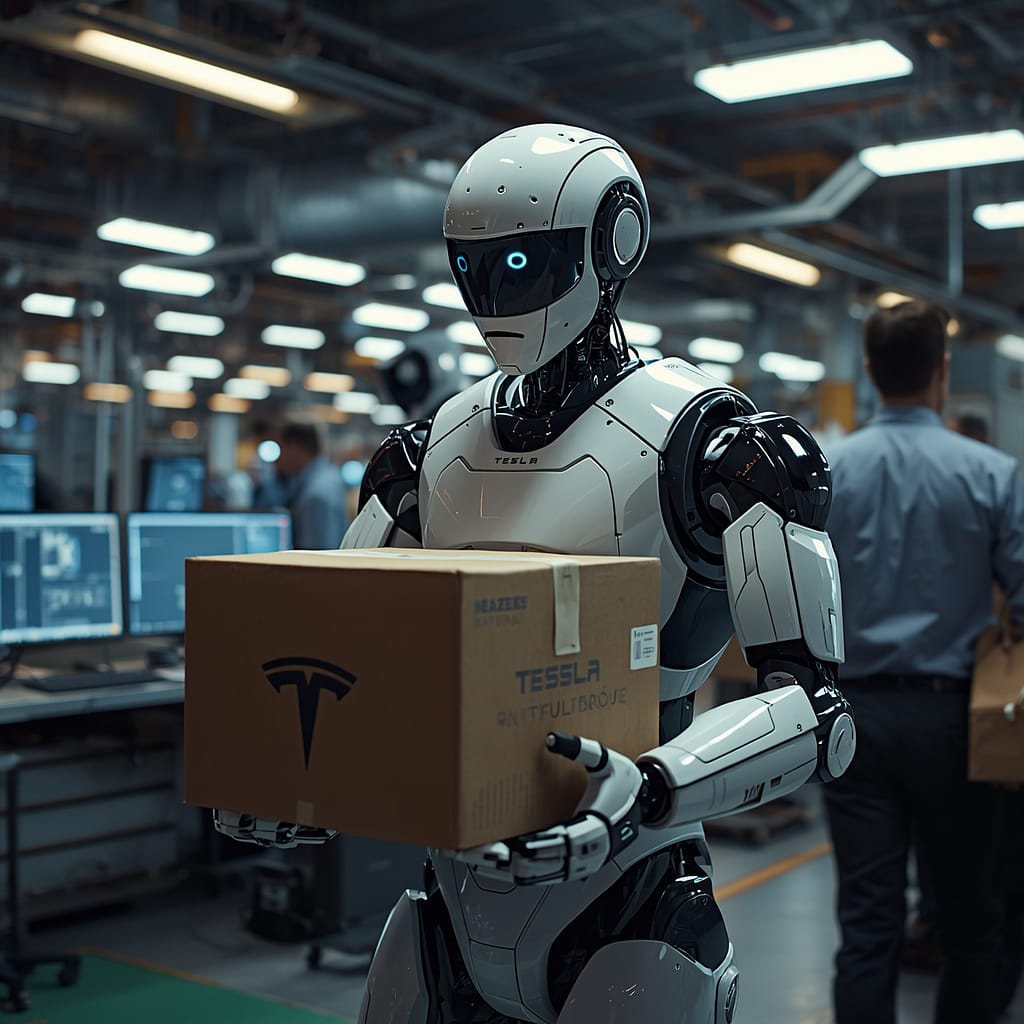
Humanoid Robots; Three Forces Combined To Enable This Breakthrough
Three primary factors have combined to bring this moment of reckoning in manufacturing. Understanding them provides crucial context for the rapid rise of humanoid hardware.
Firstly, artificial intelligence language models provided critical breakthroughs in robotic learning. The same underlying technologies that power chatbots also enable machines to mimic human motions through vision, language and action. This technique, known as video-robotics, eliminates the need for programming individual robotic movements.
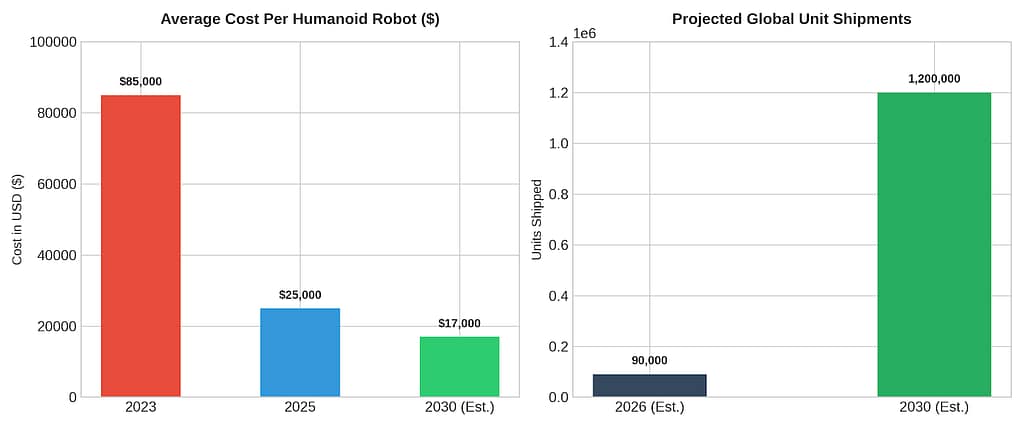
Secondly, the price of humanoid hardware dropped precipitously in 2025. The average cost per unit declined from $85,000 in 2023 to around $25,000 in 2025. Meanwhile, manufacturers report a 40% reduction in production costs year over year. Bank of America estimates a further drop to $17,000 by 2030.
Finally, corporate America faces crippling labor shortages. With turnover rates in logistics and warehousing frequently topping 40%, businesses are being forced to consider alternate solutions to keep their supply chain networks operational. The timing is right for investment in humanoid robots automation, both in the short and long term. With robots working five 10-hour shifts per week compared to humans working one 40-hour shift, the return on investment for warehouse automation occurs between 18-24 months. An Optimus humanoid robots alone represents $200,000 in labor savings over the machine’s lifespan.
Warehouses and Factories Are First to Adopt Humanoid Robots, With Lasting Consequences
Figure AI’s robots are already at work in South Carolina, building BMW cars. The units have accumulated over 1,250 hours in continuous operation and have contributed to the production of more than 30,000 vehicles to date. These are not beta machines, but production-grade hardware working in a Fortune 500 factory. Figure’s machinfes work 10-hour shifts, five days per week, lifting sheet metal and moving parts from one assembly station to the next. By virtue of being in the workplace, Figure identified design flaws and made iterative improvements to its mechanical structure. Weak points in the plastic forearms and wrist electronics heaters led to design modifications.
Meanwhile, Elon Musk has announced a shift in Tesla’s production schedule for early 2026. The electric vehicle giant will cease production of the Model S and Model X to reconfigure its Fremont factory for Optimus humanoid robots. More than 1,000 Gen 3 Tesla Optimus units are already at work in Tesla’s manufacturing facilities, performing kitting and machining. The transition to humanoid automation represents a significant investment for the company, but the path to profitability is clear. The robots are projected to cost $20,000 per unit at scale, making them ideally suited for factory automation at a price well below the $40,000 breakeven point for traditional industrial machinery.
Chinese competitor Unitree is also making major gains in both manufacturing and logistics. While Western media tends to focus on Tesla’s in-house developments and Figure AI’s recent commercialization, Unitree quietly leads the pack in terms of production volumes. This domestic competitor has shipped more than 5,500 units in 2025, surpassing Tesla, Figure AI and Agility Robotics combined and is on pace to deliver 20,000 units in 2026. With lower costs and wide distribution deals, Unitree frequently puts its cheaper options, such as Unitree A5 at $15,400, on global price platforms. The company has already signed major logistics contracts with international shippers such as Japan Airlines.
Why Warehouses Were First Movers in the Humanoid Robots Revolution
Warehouses represent a natural starting point for deploying humanoids due to their controlled, structured environment. The layout is largely predictable with standard aisle dimensions and tote sizes, while tasks are highly repetitive. This creates ideal conditions for early adopters to experiment with different technologies.
In addition, businesses in the logistics sector are predicting a significant labor shortage in the next few years. With higher attrition rates and a cost-per-hire frequently topping $5,000 for qualified workers, automated solutions that operate 24/7 without breaks, benefits, or workers’ compensation claims represent a compelling value proposition. Companies such as Amazon and UPS are already experimenting with Digit machines from Agility Robotics.
The Hidden Cost of Warehouse Automation
Within labor rights circles, the rise of warehouse automation represents a contentious issue. When viewed through an economic lens, it’s easy to ignore the human cost of cheaper productivity. When a worker earning $25 per hour is pitted against a $20,000 machine promising to save $200,000 in labor costs, the outcome is rarely beneficial to the individual.
Warehouse automation is set to disrupt the traditional low-skill job market, replacing humans in a broad range of areas from parcel sorting to pallet jacking. The transition will occur gradually, taking advantage of natural attrition and slow labor market response. However, the long-term implications are far-reaching for both individuals seeking employment and the corporate sector seeking to fill positions.
For workers seeking retraining, the transition to a robot-assisted workplace represents a major challenge. Taking a warehouse job and transitioning to a tech support position requires an education, a process that isn’t easily accomplished at scale. In the short term, these workers face displacement as companies seek to replace human workers with machines. In the long term, the transition to a fully automated economy will require a fundamental shift in workforce development, with education becoming a critical pillar.
Physical AI Signifies a Larger Transition Than Just Chatbots
When first introduced, GPT and similar language models represented a paradigm shift in artificial intelligence. The same underlying technology now fuels a larger revolution in what is being termed Physical AI. The ability to teach machines to manipulate the physical world unlocks untold opportunities in a myriad of industries, from medical to commercial to residential applications. Experts at UBS estimate the market value of humanoids could peak at $30 to $50 billion over the next decade, with a long-term forecast of $1.4 to $1.7 trillion by 2050.
The Future of Warehousing Was Telecommunicated From Your Kitchen Counter
The rapid rise of warehouse automation represents a major shift in the corporate landscape. Many of these technologies are poised to spill over into other industries, with major implications for the future of work.
Hospitals will need to automate material transport; hotels will need robots to assist with housekeeping; retail stores will need 24/7 restocking and inventory management; builders will need machines to help with material handling; and eldercare facilities will need robotic companions to assist with patient care.
While home-bound applications remain challenging, many companies are already projecting a 2026 launch for their respective home robots. 1X expects to begin shipping their first NEO home robots to American customers in 2026 on a subscription basis.
A Final Word About the Coming Changes
Humanoid automation is taking over the workplace faster than most analysts expect. These machines are already working on factory floors, inside warehouses, and in logistics centers. With production scaling up across the industry, the shift from human labor to machine-assisted work is becoming inevitable.
The question is no longer if, but when, humanoid robots will transform the future of work. In 2026, the shift is occurring faster than most people realize.