


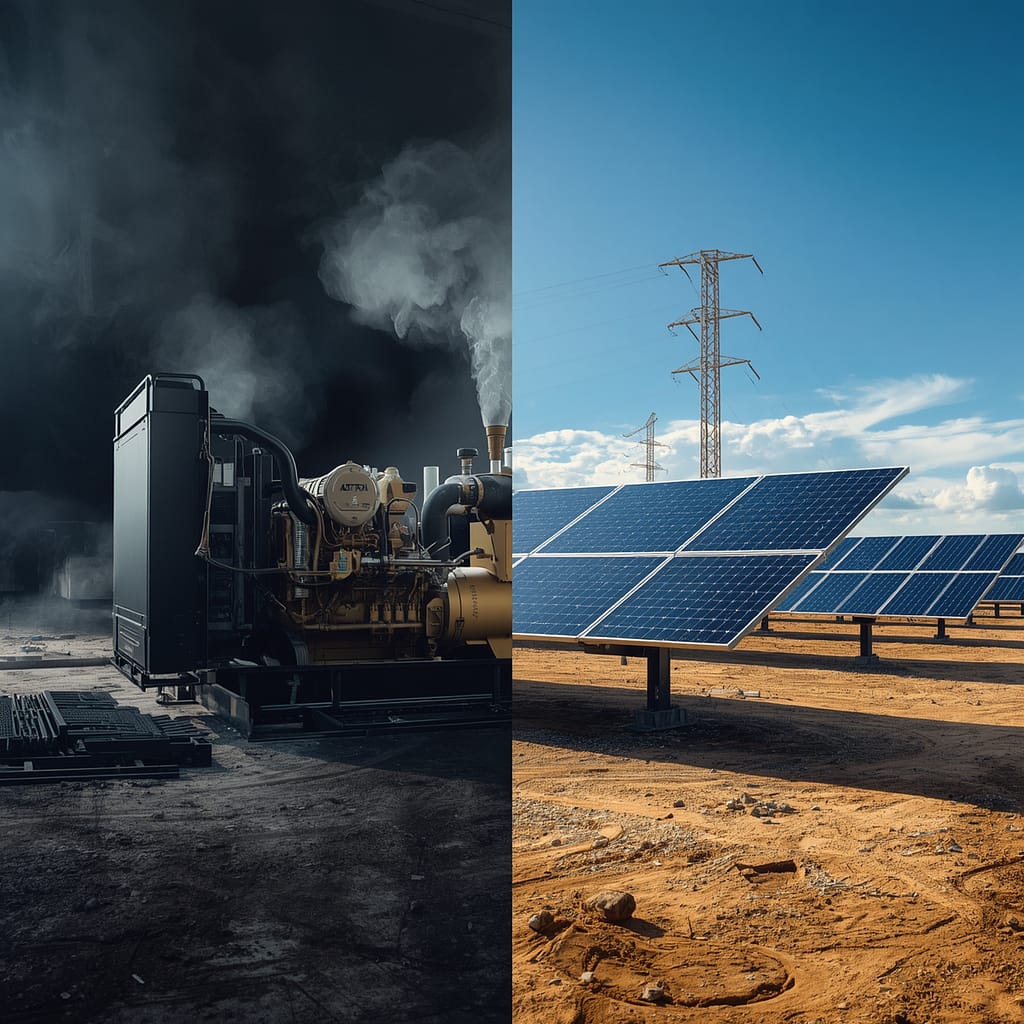
For years, work zones across America ran on diesel generators. Change arrives by 2026.
Fuel expenses rose once more during the period. In several large cities, rules on sound levels grew stricter by design. Even short-term building zones in three West Coast states face cleaner air mandates today.
Now, those managing the operations assess risks anew. Where diesel once supplied power steadily, today’s robust solar units perform just as well. Without need for refueling trips, they avoid messy oil servicing too. Maintenance demands drop sharply under such conditions. Quiet operation allows placement even within unfinished structures.
This reality exists beyond theory now. Commercial machinery operates on live construction areas at present, generating measurable returns through practical application of sustainable methods.
What follows includes essential details on top-tier solar power units suited for demanding tasks in 2026. Performance-tested versions are the focus here. Cost differences appear through clear, factual review. Payback duration is mapped with precision. Because reliability matters, only verified data shapes the overview.
Why Job Sites and Farms Are Abandoning Diesel in 2026
Money shapes the move beyond diesel generators, not green ambitions. Efficiency guides it more than any climate pledge ever could.
Each day, eight hours of use by a typical 7,000-watt diesel generator burns through four to six gallons of fuel. Priced around four dollars per gallon today, daily expenses land between sixteen and twenty-four dollars. Running nonstop for one year, just the fuel totals from four thousand up to six thousand dollars. Oil replacements, needed every fifty operating hours, are not included here. Spark plug changes are not part of this. Maintenance involving carburetors falls outside coverage. Fuel deliveries made two times each week do not include labor charges.
Right away, heavy duty solar generators remove every one of these expenses. After acquisition, power comes at no charge. Maintenance nearly disappears. Operation carries no ongoing expense.
Most people underestimate how useful flexibility indoors really is. Because diesel units emit carbon monoxide, they pose a risk when operated within closed areas. On construction projects involving indoor tasks, power often travels through cables stretching from machines placed outside. Similarly, agricultural operations using covered workspaces must rely on external setups. Safety limits where these systems can function.
No fumes come from solar generators. Inside a barn in cold months, they function safely. Powering equipment within unfinished homes is possible. A sealed workshop allows their use even when airflow is limited.
Power control in 2026 machines uses artificial intelligence, shifting how work happens outdoors. From a phone app, live updates display current battery charge remotely. Before reaching the location, clarity about usable energy is already present. Notifications appear once stored power falls under preset limits. Charging routines adjust automatically, timed alongside predicted weather patterns.
Best Overall Heavy Duty Solar Generator: EcoFlow Delta Pro Ultra
Among portable power stations, the Delta Pro Ultra handles intense commercial demands. When large equipment operates on site, professionals arrive equipped with this model.
At full operation, power delivery holds steady at 7,200 watts. For short bursts, it peaks at 14,400 watts instead. Equipment rated for 240 volts operates smoothly under load – no exceptions found. Among these: heavy-duty table saws stand ready. MIG welders function precisely. Agricultural pumps of large scale run uninterrupted. So do concrete mixers. All remain active together, powered by the Delta Pro Ultra alone.
Lithium iron phosphate makes up the core chemistry inside the battery. Unlike regular lithium-ion, LiFePO4 lasts far longer through repeated charges. Reaching 80% reduced capacity takes more than 6,500 full cycles, according to the maker. If charged each day, operation continues smoothly across 17 years. When used five days per week in business settings, function persists beyond two and a half decades.
Five thousand six hundred watts max from solar fills the unit in two and a half hours. A full workday uses every bit of stored energy. Morning light, just two hours long, brings it back to full. Lost days due to charging do not happen.
A socket of type NEMA 14-50 delivers a common 240-volt hookup, typically found on recreational vehicles. Identical to those seen in industrial welding machines, it functions without any rewiring needs. Installation proceeds as-is, since alterations are unnecessary.
At eighteen hundred sixty pounds, the core module stays grounded. Despite mass, mobility comes through built-in rollers combined with an extendable grip. Movement across locations becomes feasible without extra help. Placement inside vehicle storage areas requires only one operator.
Starting at 3,600 watt-hours, the system supports extra units linked together. Additional modules connect directly to increase total storage. Capacity grows up to 25,000 watt-hours when fully extended. Powering a full off-grid work location becomes possible across several days. Grid independence lasts through prolonged operations using this setup.
During field tests with construction teams, power was supplied continuously by the Delta Pro Ultra. It operated two miter saws alongside a table saw and an air compressor – all at once – for six hours straight. Recharging became necessary only after that period had passed.
The starting model comes at $5,799. While extra storage modules are priced at $3,199 apiece, solar units appear as separate purchases – each 400-watt panel listed at $1,599. A functional setup generally requires between $8,000 and $10,000. Though individual components add up quickly, total investment depends on configuration choices.
Best Stationary Generator: Bluetti EP900 Series
Stationary by design, the EP900 remains fixed in place. Built without mobility in mind, it serves best when installed permanently. Foundational support comes through placement at agricultural hubs, distant repair sheds, or extended-use job site cabins.
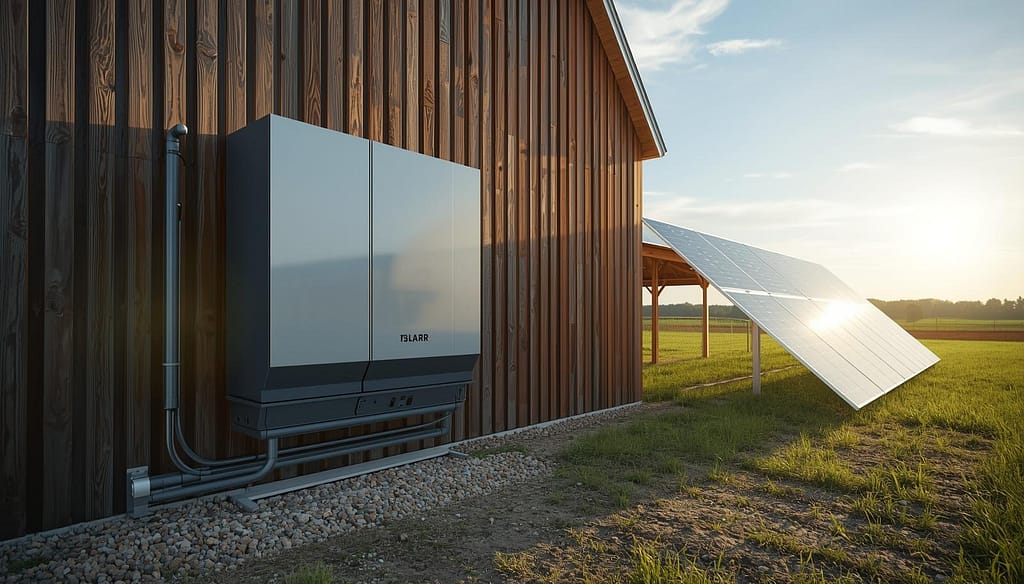
Power delivery holds steady at 9,000 watts without interruption. At peak, it briefly supports up to 18,000 watts when demand spikes. Most home breaker boxes cannot match this level of supply. From just one device, full operation of a detached structure becomes possible.
Solid-state lithium iron phosphate forms the core of this battery. In 2026, such chemistry stands at the forefront of development. Higher energy density emerges when compared to conventional LiFePO4 designs. Lifespan extends further due to reduced degradation over time. Heat control performs more effectively under stress conditions. Among peers within the segment, longevity of the EP900 remains unmatched.
Despite harsh conditions, performance remains consistent. Built to IP65 specifications, the housing resists moisture ingress. Rain or snow makes little difference once mounted outside. Dust cannot penetrate the sealed structure. Even under thermal swings, operation stays stable. Shelter is unnecessary due to rugged exterior design.
Within less than ten milliseconds, operation shifts to backup. If main supply stops, the EP900 draws from stored energy without pause. Equipment that requires stable input remains unaffected. There is no sudden stop in computing tasks. Temperature regulation continues without restarting.
Three hours covers full solar recharge under peak conditions – this assumes a 9,000-watt supply. A high-capacity setup demands significant panel deployment. At least twelve units rated at 400 watts each form the baseline needed to reach that level of performance.
Professional electrical work is necessary for setup. Though similar to a full-house generator, the EP900 links directly to a structure’s power hub. Rules differ depending on local jurisdiction. Expense should include fees paid to licensed electricians.
Starting at 9,900 watt-hours, the system scales up to a full 79,200 by adding units one after another. Power availability stays steady even when storms last several days straight.
A single wheat operation in Oklahoma stopped using diesel entirely once the EP900 was operational. Powering irrigation systems, drying harvested grain, along with maintaining stable conditions inside storage buildings now runs uninterrupted off-grid. Annual fuel expenses that once reached eighteen thousand dollars have since dropped to zero. With consistent output, fieldwork continues regardless of external power availability. Equipment performance remains steady through peak demand periods.
At seven thousand five hundred dollars, the starting price applies to the core system alone. Each additional battery module adds four thousand four hundred ninety-nine dollars. Installation fees, covering both panel setup and wiring upgrades, generally range between fifteen thousand and twenty-five thousand dollars.
Best Portable Generator: Anker SOLIX F3800
Heavy equipment often limits movement where flexibility matters. Yet this model brings strength without sacrificing transport ease. One individual handles it, even over rough ground. Power remains high despite compact dimensions.
Output remains steady at 6,000 watts. Peak power touches 12,000 watts during startup surges. Most tools on a work site operate smoothly under this load, though heavy-duty welders may exceed its limits. Running circular saws poses no difficulty; neither do drills or air compressors. Lighting systems stay powered without interruption. Smaller water pumps function reliably when connected.
Despite its 132-pound weight, mobility remains manageable due to the unified wheel setup alongside a sturdier grip frame. When compared to the Delta Pro Ultra, this version shows notable reduction in mass. Rolling over uneven terrain – such as loose stone, soil, or scattered job-site remnants – is possible thanks to generously sized tires.
Beginning at noon, sunlight restores full charge within two hours using six 400-watt panels. Maximum intake reaches 2,400 watts under ideal conditions. After eight hours of operation, power drops to minimum levels. Restoration occurs naturally when exposure continues into midday. Following typical usage patterns, energy returns completely by late afternoon.
With a 3,840 watt-hour storage core, the main unit supports expansion – reaching 11,520 watt-hours when extra modules are linked. Additional stacks may be unnecessary; many rely solely on original volume during daylong operations at fixed sites. Though larger demand exists, typical usage patterns align closely with standard configuration output.
At the unit, details appear on a screen built right in. Power usage updates every second. Battery level stays in view constantly. How long it will last shows up clearly. All data comes without needing another device. A mobile application is not necessary here.
Throughout actual field use, the F3800 supported an entire mobile fencing team across complete eight-hour shifts. Not only post drivers operated steadily, but also tool battery chargers along with site lighting functioned together without strain. Despite heavy demand, performance remained stable well below maximum load thresholds.
At the start, the base unit sits at $3,999. Following that, one extra battery adds $2,499 to the total. Each 400-watt solar panel comes in at $999 separately. Taken together, a full portable setup runs close to $6,500 overall.
The Honest Cost Comparison: Solar vs Diesel
By 2026, heavy duty solar generators make more financial sense than before. Not even a comparison remains.
Priced between $1,200 and $2,500, a 7,000-watt diesel generator requires upfront payment. Running it eight hours per day uses fuel costing $4,000 up to $6,000 each year. With oil changed every fifty hours, yearly expense reaches $480 at thirty dollars per service. Air filters need replacement on schedule, bringing an extra $120 by year-end. Eighty dollars covers spark plug updates across twelve months. A yearly expense of sixty dollars covers fuel stabilizer during storage periods. Over time, maintenance involving carburetor service occurs twice per decade at a typical outlay of one hundred fifty dollars each year.
Cost for the first year of diesel runs between six thousand and eight thousand five hundred dollars. Over a span of five years, expenses reach twenty-two thousand up to thirty-five thousand dollars. Major mechanical failures are not included in these figures. A diesel generator typically lasts from ten thousand to fifteen thousand operating hours. When used eight hours each day, its service period stretches three to five years prior to needing replacement.
Priced at eight thousand dollars, the full EcoFlow Delta Pro Ultra package includes solar panels. No upkeep expenses occur over time due to design efficiency. Energy input requires no fuel expenditure whatsoever. Service span extends between seventeen and twenty-five years, tied directly to battery usage cycles. When used every day, savings offset initial investment within fourteen to sixteen months versus diesel systems.
Pure savings mark each operational day once payback completes. In year two, reductions range from six thousand to eight thousand five hundred dollars. Savings reappear in year three within that same band. Across a decade, solar power cuts costs by sixty thousand up to eighty-five thousand dollars when set beside diesel.
When more than one generator operates, cost reductions grow. Operating three diesel units, a building firm pays between eighteen thousand and twenty-five thousand dollars each year for upkeep and fuel. Three Delta Pro Ultra systems demand twenty-four thousand dollars at the start instead. The point where costs are recovered arrives after fourteen months pass. Over ten years, money saved passes two hundred thousand dollars.
Real-World Use Cases Across Industries
Each morning begins faster now that diesel is gone. Solar energy runs every tool on the platform. Pneumatic nailers, spinning blades, lights at dusk – all draw from Delta Pro Ultra systems. A firm in Colorado found fewer delays once gas deliveries stopped. Time once spent preparing the site shrinks by three-fourths each day. Work moves ahead without waiting.
A single EP900 now powers irrigation pumps at a remote almond orchard in central California. Fuel deliveries every week ceased after the switch from diesel units. Instead of burning fossil fuels, solar energy sustains daily operation. Over twelve months, cost reductions surpassed twenty-two thousand dollars. Payback occurred within ten months. Permanent electrical supply comes directly from the Bluetti system.
Out in the field, mobile welders rely on Anker F3800 power stations. A company based in Texas found it no longer needed to rent diesel generators. Instead of burning fuel, the unit powers MIG setups used in everyday fixes and builds. Thanks to quieter operation, clients now allow work inside buildings. Satisfaction rose when fumes and noise dropped during jobs.
Outside lights and music gear find their source in Delta Pro Ultra units when events unfold. A business based in Florida stopped leasing generators altogether. During quiet moments like wedding rituals, the device operates without noise. Diesel odor does not appear. Fumes are absent.
Powering remote telecommunication towers, the Bluetti EP900 serves as main supply where grid lines stand by. Twelve locations across rural Montana now run on this setup. With fuel no longer needed, transportation expenses vanished entirely. Instead of coming every month, service trips happen just four times per year.
What Most Buyers Get Wrong
Most errors begin with overlooking how much solar capacity is truly needed. Not counting the full role of sunlight capture leads to imbalance. One part depends on the power source, yet another relies on energy collection. Failing to install enough panels delays recovery after usage. Functionality becomes limited when input lags behind demand.
Eight to twelve panels usually handle robust setups, needing three or four hours of unobstructed sun for full charge. Cost at onset runs high. Operation becomes adaptable over time. That shift follows from earlier investment in panel quantity.
Most daily tasks run on standard battery size alone. Still, longer missions need extra power sources added later. The second error lies in overlooking that possibility. When usage extends beyond grid access, plan costs early. Extended independence demands those additions be included from start.
Most overlook what actually matters when weighing options. Not the upfront number on a fuel receipt against equipment cost. Five-year expenses reveal reality instead. Ownership costs tilt clearly toward sunlight-powered setups.
Fourth comes overlooking how heavy a unit is or how easily it travels. When shifting locations every day, the Anker F3800 becomes the logical choice. For those who relocate once per month, consider instead the Delta Pro Ultra. In cases where equipment stays fixed, select the Bluetti EP900. Suit each device to its real-world role.
Among errors made, omitting expert setup of fixed units ranks fifth. Proper connection to power circuits matters for the EP900. When owners install it themselves, risks emerge while guarantees expire. Expense tied to certified electrical labor should be expected. Though savings may seem possible now, long-term consequences follow poor setups.
Essential Accessories You Need
What holds solar panels in place often gets overlooked. Despite strong winds, stability remains essential. When placing on open land, secure foundations become necessary instead of simple placement. For rooftop setups, seals prevent water entry through roof openings. A range between three hundred and eight hundred dollars covers reliable support structures.
Despite needing space separation, solar panels mount where sunlight reaches. A generator can rest under cover nearby. Reaching that setup becomes possible using extended wiring. Each set of twenty-five foot links ranges from eighty to one hundred fifty dollars. Owning two sets should cover most layouts. Placement freedom comes through these connections.
When stored or moved, generators stay shielded by weather-resistant enclosures. Priced between sixty and one hundred twenty dollars, robust versions offer that protection. Dust stays out because these thick materials resist wear. Moisture cannot enter when tightly sealed fabrics wrap around the unit.
Built into every reliable system, grounding rods secure electrical stability. Ranging from forty to eighty dollars, the components remain required by code. Safety takes priority when installation cannot be avoided.
Smooth operation of vehicles depends on proper tire pressure tools along with care items for wheels. Around thirty dollars covers essential upkeep materials.
Final Recommendation
Should work take you across multiple locations each day, consider the Anker SOLIX F3800. This unit supplies sufficient energy while remaining practical to transport. Although large in output, it stays manageable in size. Because mobility matters just as much as performance, its design supports frequent relocation. Wherever tasks lead, this model follows without compromise.
When power demands are high, the EcoFlow Delta Pro Ultra meets intense requirements. Whatever device attaches to it receives consistent support.
Should a long-term solution be needed on agricultural land or isolated sites, consider the Bluetti EP900. Built to exceed typical lifespans, it handles full building operations without strain. When durability matters most, this unit delivers consistent output across extended periods.
Now closing: the age of diesel generators. This shift already underway favors those moving first, gaining efficiency and adaptability. Regulatory pressure or market forces will push slower movers forward. Advantages belong not to waiters, but to those adjusting today.